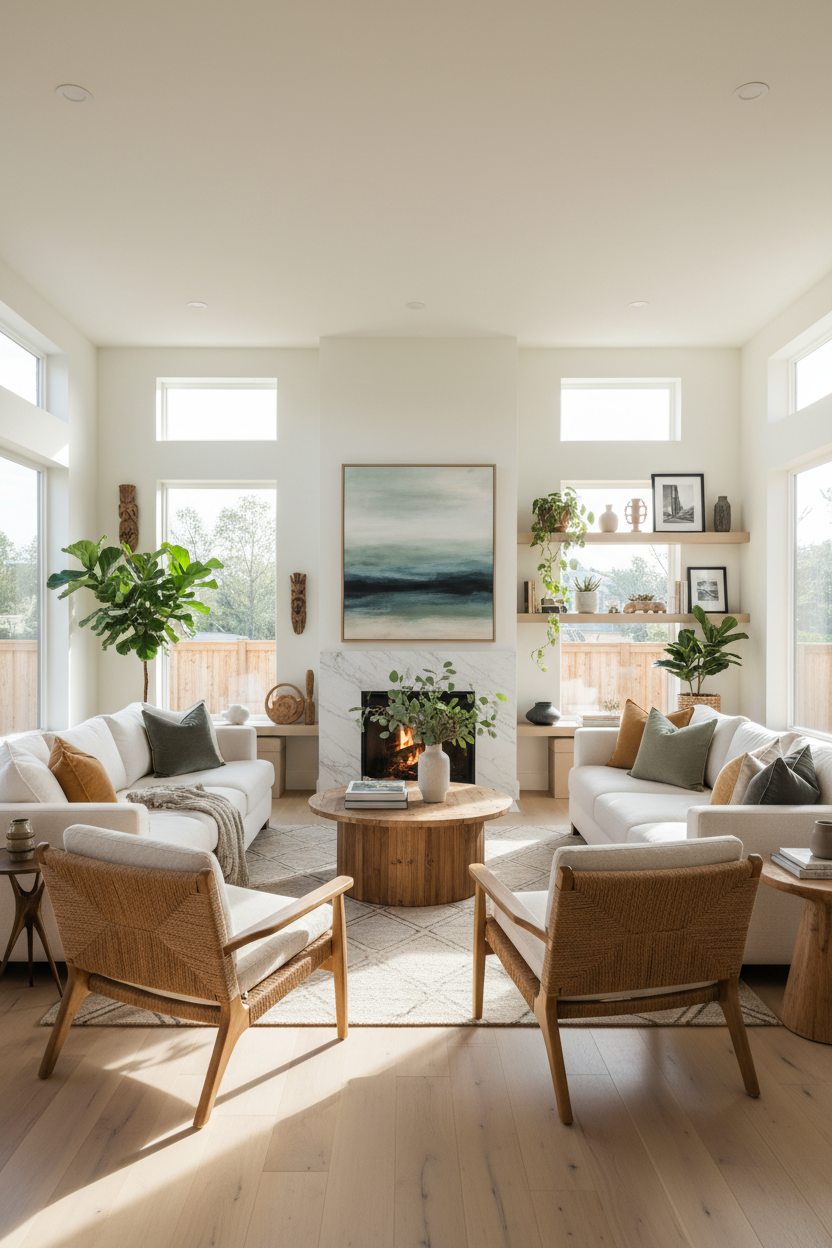
Key Takeaways
- Living room decor starts with understanding your space, lifestyle, and personal style preferences
- Budget-friendly transformations are possible with strategic furniture placement and affordable accent pieces
- Lighting creates ambiance—layer ambient, task, and accent lighting for the perfect atmosphere
- Color psychology matters—choose palettes that reflect how you want to feel in your space
- Small living rooms benefit from multifunctional furniture and vertical storage solutions
- Textures and layers (rugs, throws, pillows) add depth and coziness without major investment
- The 60-30-10 color rule helps create balanced, professional-looking rooms
Table of Contents
- Understanding Your Living Room Style: Where to Begin
- The Foundation: Furniture Selection and Arrangement
- Color Schemes That Transform Your Space
- Lighting: The Game-Changer Everyone Overlooks
- Area Rugs: The Foundation That Ties Everything Together
- Texture and Layers: Creating Depth and Coziness
- Wall Decor: From Blank Canvas to Gallery Wall
- Storage Solutions: Beautiful and Functional
- Plants: Bringing Life Into Your Living Room
- Small Living Room Strategies That Actually Work
- Budget-Friendly Living Room Makeover Tips
- Seasonal Decor Updates
- Common Living Room Decor Mistakes (And How to Avoid Them)
- Frequently Asked Questions
Introduction
Living room decor is the foundation of creating a home that truly feels like yours. Whether you're working with a spacious area or a cozy apartment setup, the right design choices transform your living room from just another room into the heart of your home where memories are made, guests are welcomed, and you unwind after long days.
I've spent years helping homeowners worldwide discover their perfect living room style, and here's what I know for sure: you don't need a massive budget or a professional designer to create a space you'll love. What you need is the right guidance, practical tips, and products that actually work for your lifestyle.
In this comprehensive guide, you'll discover everything from foundational design principles to specific product recommendations that deliver real results. We're covering color schemes, furniture arrangement secrets, lighting strategies, and those finishing touches that make all the difference. Whether you're starting from scratch or refreshing your current space, you'll find actionable ideas you can implement today.
Let's transform your living room into a space that perfectly balances style, comfort, and functionality.
Products Featured in This Article
| Product Category | Price Range | Best For | Why We Love It |
|---|---|---|---|
| Modern Sectional Sofa | $350 - $650 | Families & entertaining | Versatile configuration, durable upholstery, comfortable for daily use |
| Minimalist Coffee Table | $65 - $190 | Small to medium spaces | Space-saving design, hidden storage, easy to move |
| Statement Area Rug | $50 - $270 | Defining zones & warmth | Instantly transforms atmosphere, adds texture and color |
| Adjustable Floor Lamp | $35 - $115 | Reading corners & ambiance | Multiple brightness settings, modern aesthetic, directional light |
| Storage Ottoman | $58 - $140 | Clutter control | Dual-purpose seating + storage, hides remotes and magazines |
| Floating Shelves Set | $25 - $65 | Display & vertical space | Easy installation, showcases decor without floor space |
| Velvet Throw Pillows (Set) | $22 - $58 | Adding luxury texture | Instantly elevates look, easy to change seasonally |
| Indoor Plants Bundle | $12 - $38 | Air quality & life | Low maintenance, brings nature indoors, health benefits |
Quick Shop Links:
- Modern Sectional Sofa →
- Lift-Top Coffee Table →
- Geometric Area Rug →
- Arc Floor Lamp →
- Storage Ottoman →
- Floating Shelves →
- Throw Pillow Set →
- Plant Bundle →
Understanding Your Living Room Style: Where to Begin
Before you buy a single item or paint a wall, you need to understand what style resonates with you. Living room decor isn't about following trends blindly—it's about creating a space that reflects your personality while serving your daily needs.
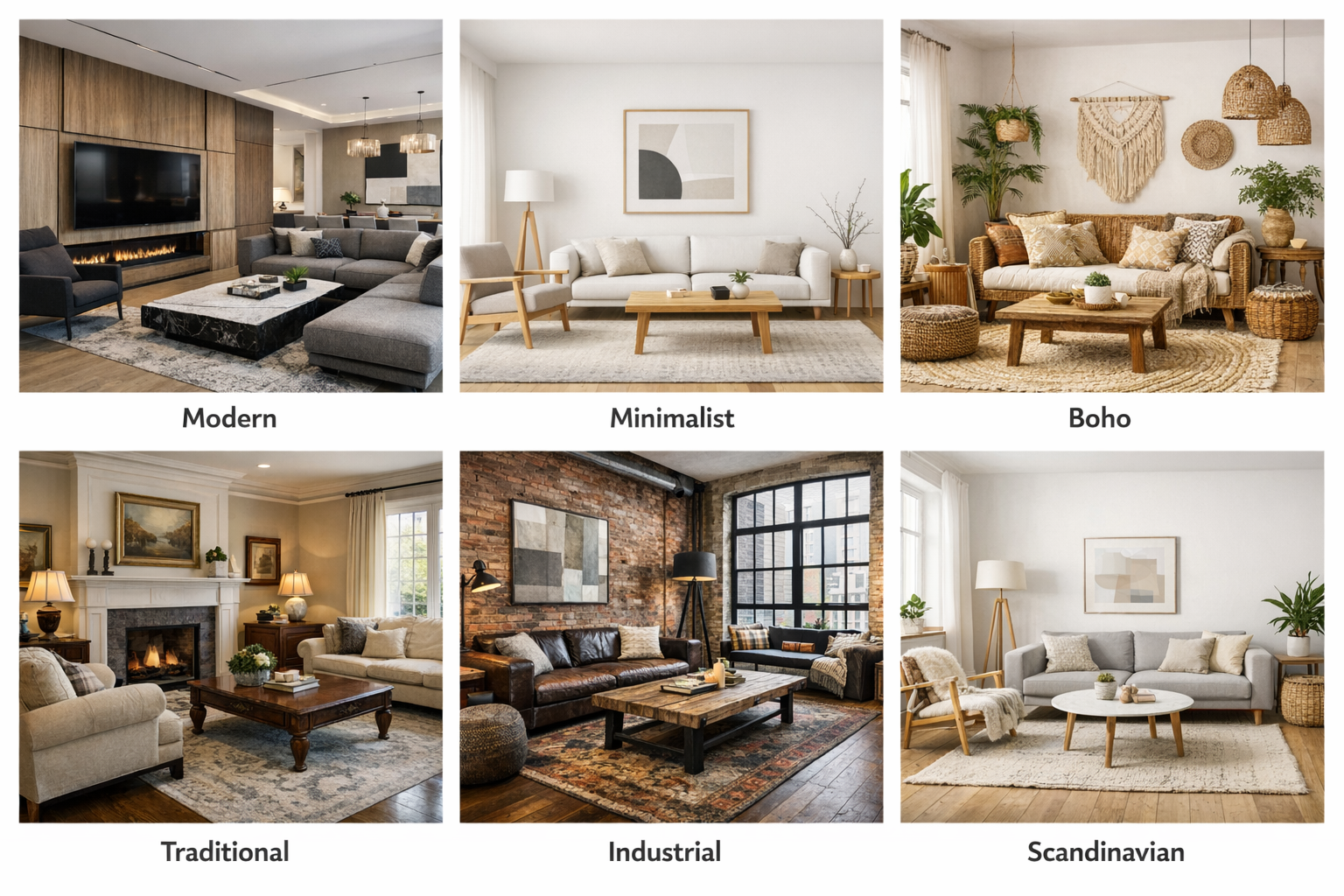
The Most Popular Living Room Styles in 2026
Modern/Contemporary Style Clean lines, neutral colors with bold accents, and functional furniture define modern living rooms. You'll love this if you appreciate simplicity and want a space that feels current without being trendy. Think sleek sofas in gray or beige, geometric patterns, and minimal clutter.
Minimalist Style Less is genuinely more here. Minimalist living rooms feature only essential furniture, plenty of negative space, and a calm color palette (usually whites, grays, and natural wood tones). Perfect for small spaces or anyone who finds peace in simplicity.
Scandinavian (Scandi) Style Cozy meets functional in this hygge-inspired approach. Natural materials like wood and wool, soft textures, neutral colors with occasional pastels, and lots of natural light characterize Scandi style. It's currently one of the most sought-after looks globally because it feels both comfortable and sophisticated.
Boho/Eclectic Style If you love color, patterns, and collected treasures from travels, boho is your style. Layer different textures, mix vintage with new, incorporate plants everywhere, and don't be afraid of bold colors. This style gives you creative freedom.
Traditional/Classic Style Timeless elegance through rich wood tones, formal furniture arrangements, and classic patterns (damask, florals, stripes). This style works beautifully in formal living rooms or if you appreciate heritage pieces.
Industrial Style Exposed elements, metal accents, brick or concrete finishes, and vintage lighting create this urban warehouse aesthetic. It's edgy yet sophisticated and works surprisingly well in modern Kenyan homes.
My Personal Approach: The Style Quiz Method
I'd choose a style based on three simple questions:
- How do you use your living room most? (Entertaining, relaxing, family activities, formal occasions)
- What colors make you feel most at peace? (Your answer reveals your color preferences)
- What's your maintenance tolerance? (Some styles require more upkeep than others)
Your honest answers will guide you toward a style that actually works for your life, not just looks good in photos.
The Foundation: Furniture Selection and Arrangement
Living room furniture makes or breaks your space. Here's how to choose pieces that look great and serve you well for years.
Choosing Your Anchor Piece: The Sofa
Your sofa is the single most important investment in your living room. It's where you'll spend countless hours, so comfort matters as much as style.
Size Matters More Than You Think A common mistake I see? Buying a sofa that's too large or too small for the space. Here's my simple rule:
- Small living rooms (under 12 sqm): 2-seater sofa or loveseat
- Medium living rooms (12-20 sqm): 3-seater sofa or small sectional
- Large living rooms (over 20 sqm): Large sectional or sofa + chairs combo
Material Selection Guide Different lifestyles need different fabrics:
- Families with kids: Microfiber or performance fabric (stain-resistant, easy cleaning)
- Pet owners: Tight-weave fabrics, avoid delicate materials like silk
- Formal entertaining: Velvet or linen (luxurious but requires care)
- Budget-conscious: Cotton blends (affordable, comfortable, reasonably durable)
Top Sofa Recommendation
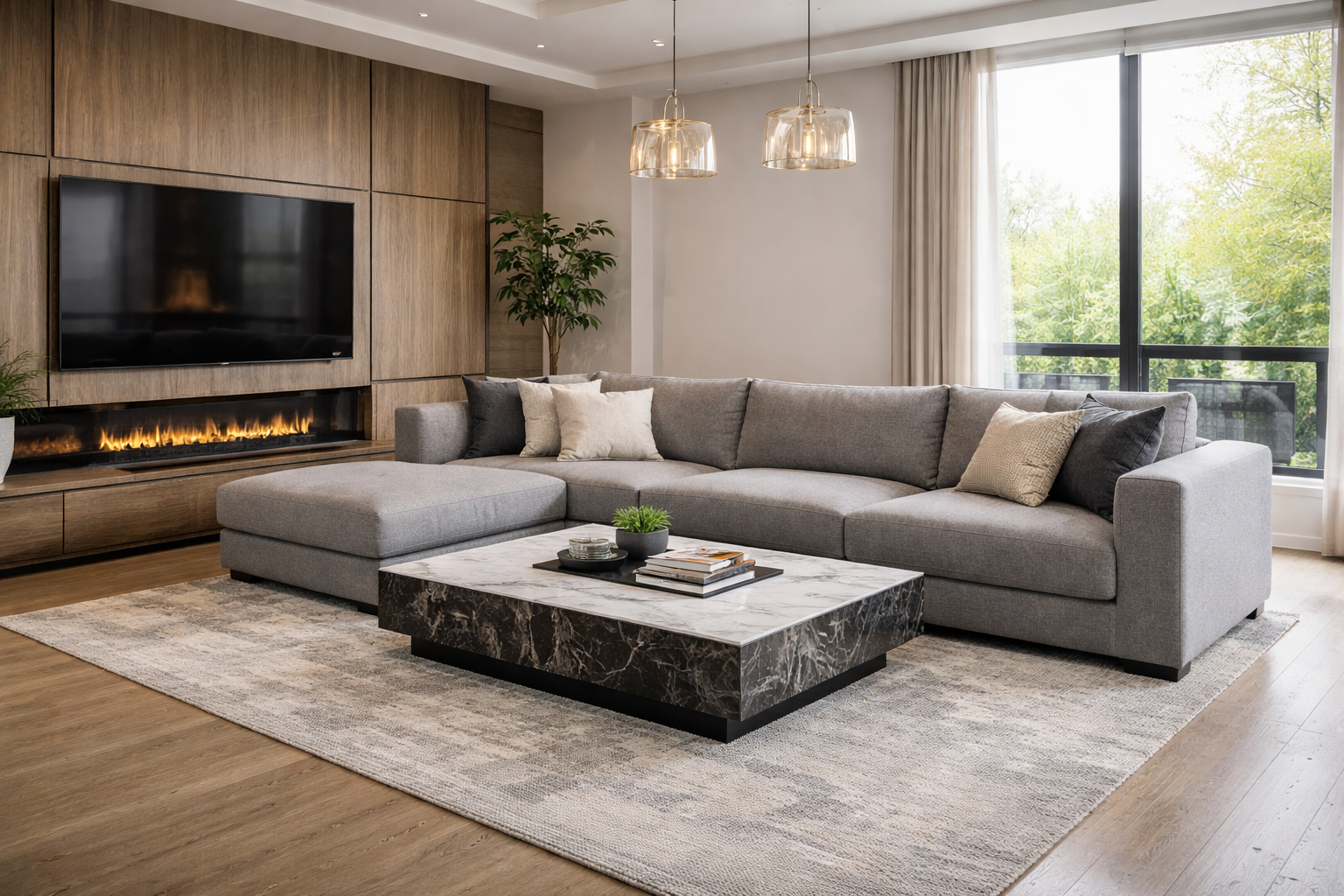
Modern L-Shaped Sectional Sofa
Price: $500 - $650 (Varies by retailer and fabric choice) Best For: Medium to large living rooms, families, frequent entertainers
Why We Recommend It: This versatile sectional adapts to different room layouts and comfortably seats 5-6 people. The neutral gray or beige upholstery works with any color scheme, while the sturdy hardwood frame ensures years of use. I particularly love how the chaise lounge section creates a cozy corner for reading or napping.
Pros: ✅ Reversible chaise configuration fits different room layouts ✅ Removable cushion covers for easy cleaning ✅ Deep seating provides excellent comfort ✅ Neutral colors match any decor style ✅ Quality construction supports daily use
Cons: ❌ Requires professional delivery and setup ❌ Substantial footprint isn't suitable for very small spaces ❌ Initial cost higher than basic sofas
My Take: If your budget allows, this is the investment piece that elevates your entire living room. The comfort and versatility justify the price, and you'll use it daily for years. Look for sales around holidays when major retailers offer 15-20% discounts.
👉 Check Current Price & Reviews on Amazon
Coffee Tables: The Functional Centerpiece
Don't underestimate this piece—your coffee table needs to work hard while looking good.
Coffee Table Selection Formula:
- Length should be 2/3 the length of your sofa
- Height should match or sit 1-2 inches below sofa cushions
- Distance from sofa: 14-18 inches (comfortable leg room)
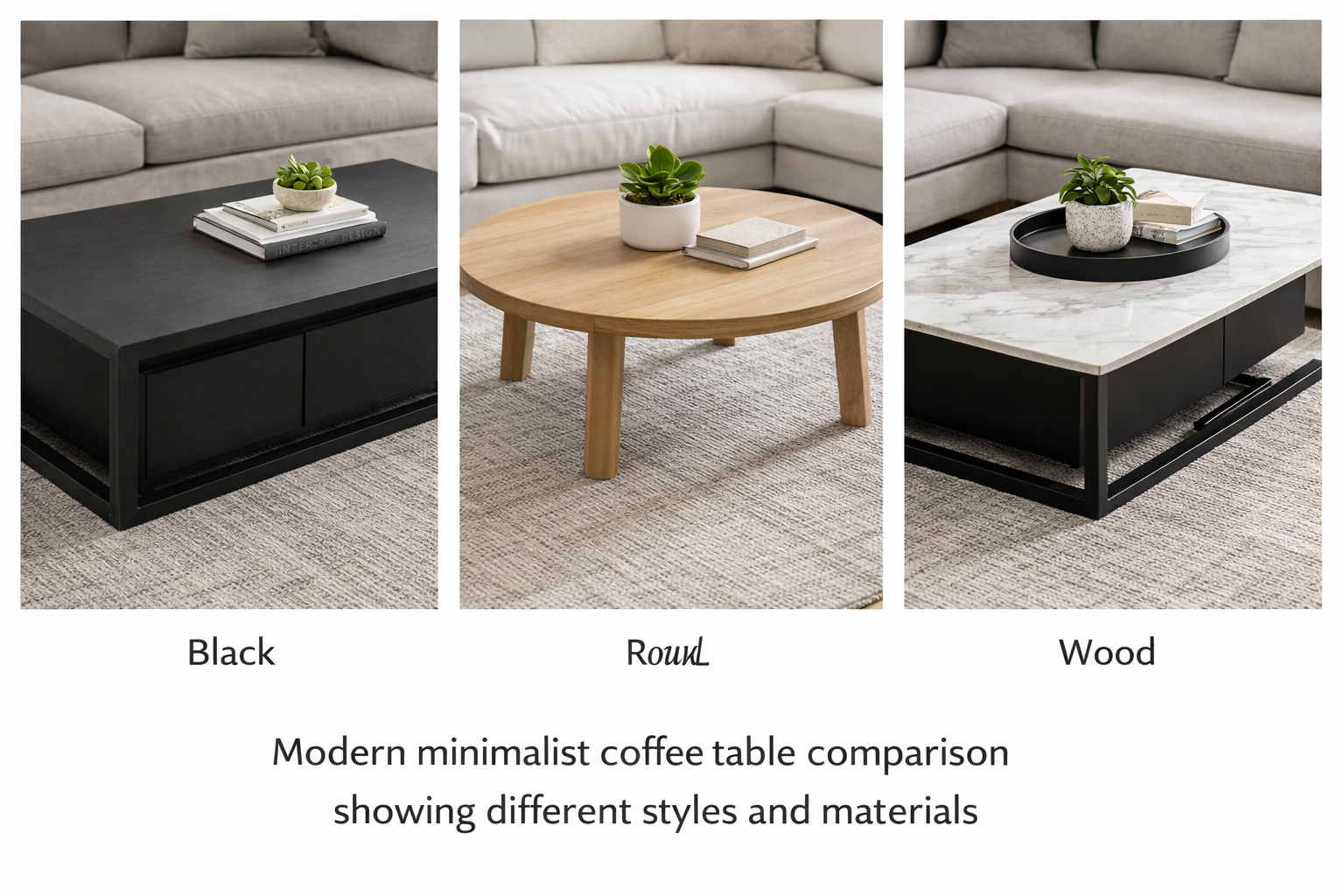
Featured Coffee Table
Minimalist Lift-Top Coffee Table with Storage
Price: $120 - $190 Best For: Small spaces, working from home, hidden storage needs
Why This Works: The lift-top mechanism transforms this from a regular coffee table into a comfortable work surface or dining spot. Hidden storage beneath keeps remotes, magazines, and living room clutter completely out of sight. The clean lines and neutral finish work with any style.
Pros: ✅ Dual-height functionality (coffee table and work surface) ✅ Generous hidden storage compartment ✅ Smooth lift mechanism that lasts ✅ Compact footprint for smaller rooms ✅ Easy to assemble
Cons: ❌ Lifting mechanism requires occasional tightening ❌ Limited surface area when closed ❌ Not suitable for very formal traditional decor
My Take: This is one of those "why didn't I buy this sooner" pieces. The storage alone justifies the price, but the lift-top feature genuinely changes how you use your living room. Perfect for apartments and small homes where space efficiency matters.
👉 See Latest Prices & Available Colors on Amazon
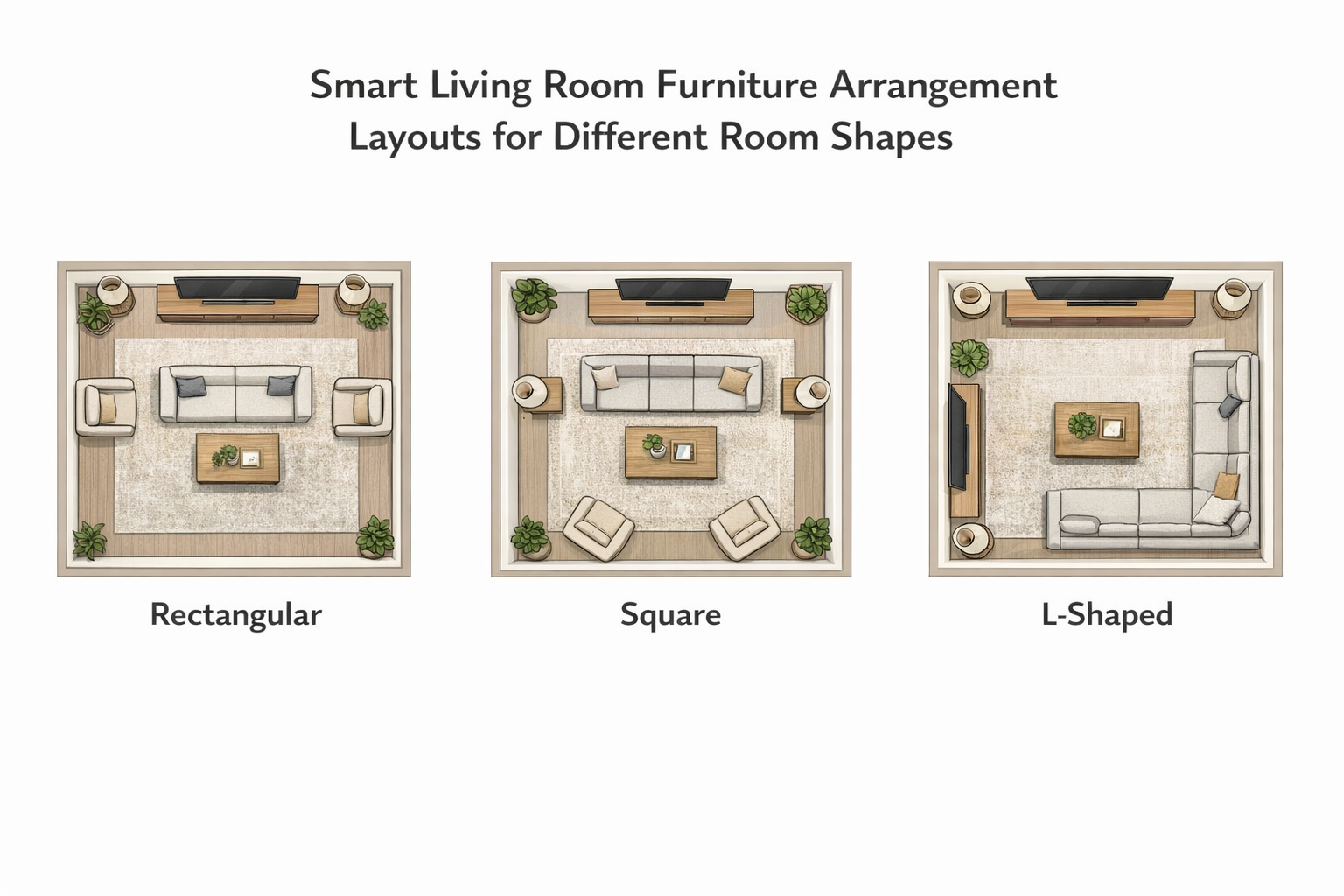
Smart Seating Arrangements
Furniture arrangement impacts how your room feels and functions. Here are layouts that actually work:
Conversation-Focused Layout (Best for: Entertaining)
- Sofa facing two chairs with coffee table in center
- Creates intimate conversation zone
- Everyone faces each other naturally
- Works in square or rectangular rooms
TV-Focused Layout (Best for: Family movie nights)
- Sofa directly facing TV wall
- Additional seating angled toward TV
- Coffee table offset to one side
- Ensures comfortable viewing angles
Multi-Zone Layout (Best for: Large open-plan spaces)
- Sofa creates room division
- Reading nook in one corner
- Conversation area in another
- Area rugs define each zone
Floating Furniture Trick: Pull furniture away from walls by 6-12 inches. This counterintuitive move actually makes rooms feel larger and more intentional. Trust me on this—it works even in small spaces.
Color Schemes That Transform Your Space
Living room color schemes set the emotional tone of your home. Here's how to choose colors that work.
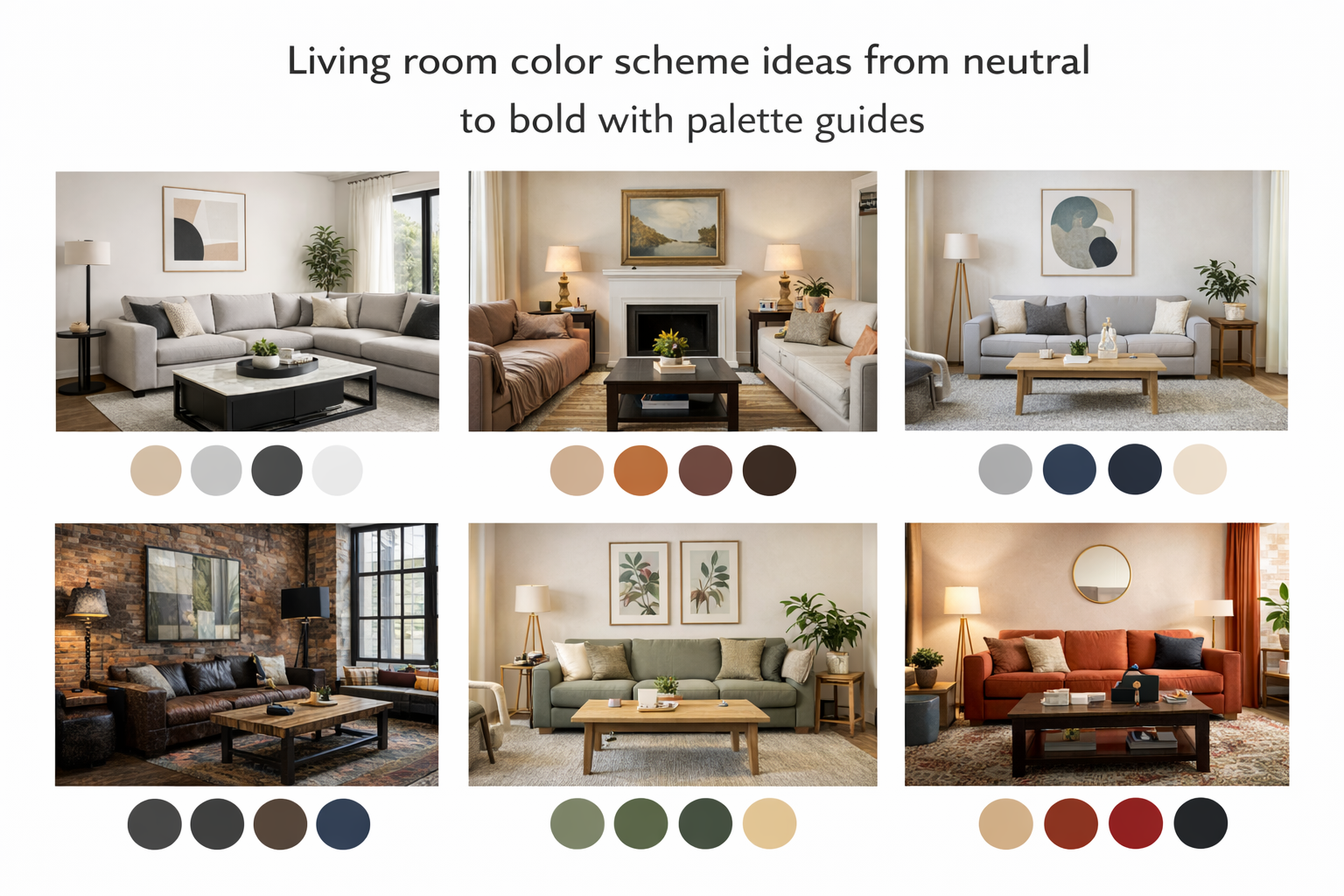
The 60-30-10 Color Rule (Your Secret Weapon)
Professional designers use this formula, and now you can too:
- 60% = Dominant color (walls, large furniture)
- 30% = Secondary color (accent furniture, curtains)
- 10% = Accent color (pillows, artwork, accessories)
This creates visual balance without feeling overwhelming.
Popular Color Combinations That Work
Neutral Elegance
- 60%: Soft gray or warm beige walls
- 30%: White or cream furniture
- 10%: Navy blue or emerald green accents
- Mood: Sophisticated, calming, timeless
- Best for: Those who want flexibility to change accents seasonally
Warm and Inviting
- 60%: Cream or warm white walls
- 30%: Caramel or tan furniture
- 10%: Burnt orange or terracotta accents
- Mood: Cozy, welcoming, comfortable
- Best for: Creating hygge-inspired spaces, cooler climates
Modern Drama
- 60%: Charcoal gray walls
- 30%: Light gray or white furniture
- 10%: Mustard yellow or blush pink accents
- Mood: Bold, contemporary, confident
- Best for: Statement-making spaces, those comfortable with darker walls
Scandi Fresh
- 60%: Pure white or light gray walls
- 30%: Natural wood furniture tones
- 10%: Dusty blue or sage green accents
- Mood: Clean, airy, peaceful
- Best for: Small spaces, lovers of minimalism
Earthy Boho
- 60%: Warm white or sand walls
- 30%: Terracotta or rust furniture/textiles
- 10%: Deep green or turquoise accents
- Mood: Relaxed, eclectic, nature-connected
- Best for: Free spirits, plant lovers, collectors
Color Psychology Quick Guide
Colors genuinely affect our emotions:
- Blue: Calming, reduces stress (perfect for relaxation spaces)
- Green: Balancing, nature-connection (brings outdoors in)
- Yellow: Energizing, cheerful (great for social spaces)
- Orange: Warm, inviting (encourages conversation)
- Gray: Sophisticated, neutral (versatile backdrop)
- Beige/Cream: Comfortable, timeless (never goes out of style)
Choose colors based on how you want to feel in your living room, not just what looks trendy.
Lighting: The Game-Changer Everyone Overlooks
Living room lighting deserves serious attention. Poor lighting ruins even beautiful decor, while great lighting elevates budget pieces.
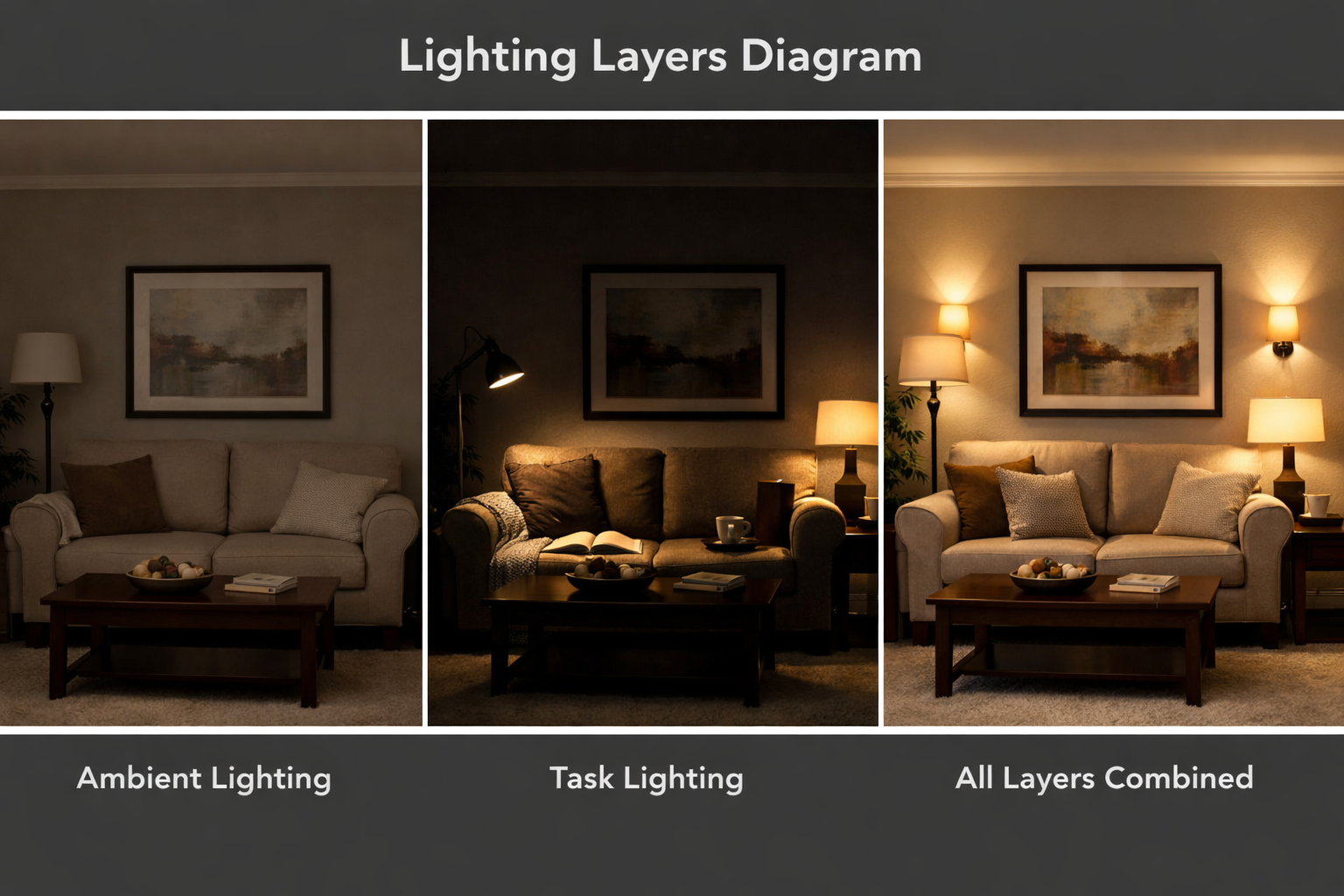
The Three-Layer Lighting System
Professional designers always use three lighting types. Here's how:
Layer 1: Ambient Lighting (Overall illumination)
- Ceiling fixtures or recessed lights
- Provides general visibility
- Should be dimmable for flexibility
- Pro tip: Avoid single central ceiling lights—they create harsh shadows
Layer 2: Task Lighting (Functional light for activities)
- Reading lamps beside seating
- Floor lamps near work areas
- Focused light where you need it
- My favorite: Adjustable floor lamps that move where needed
Layer 3: Accent Lighting (Decorative highlights)
- Table lamps on side tables
- LED strips behind TV
- Picture lights on artwork
- Creates ambiance and depth
Top Lighting Recommendation
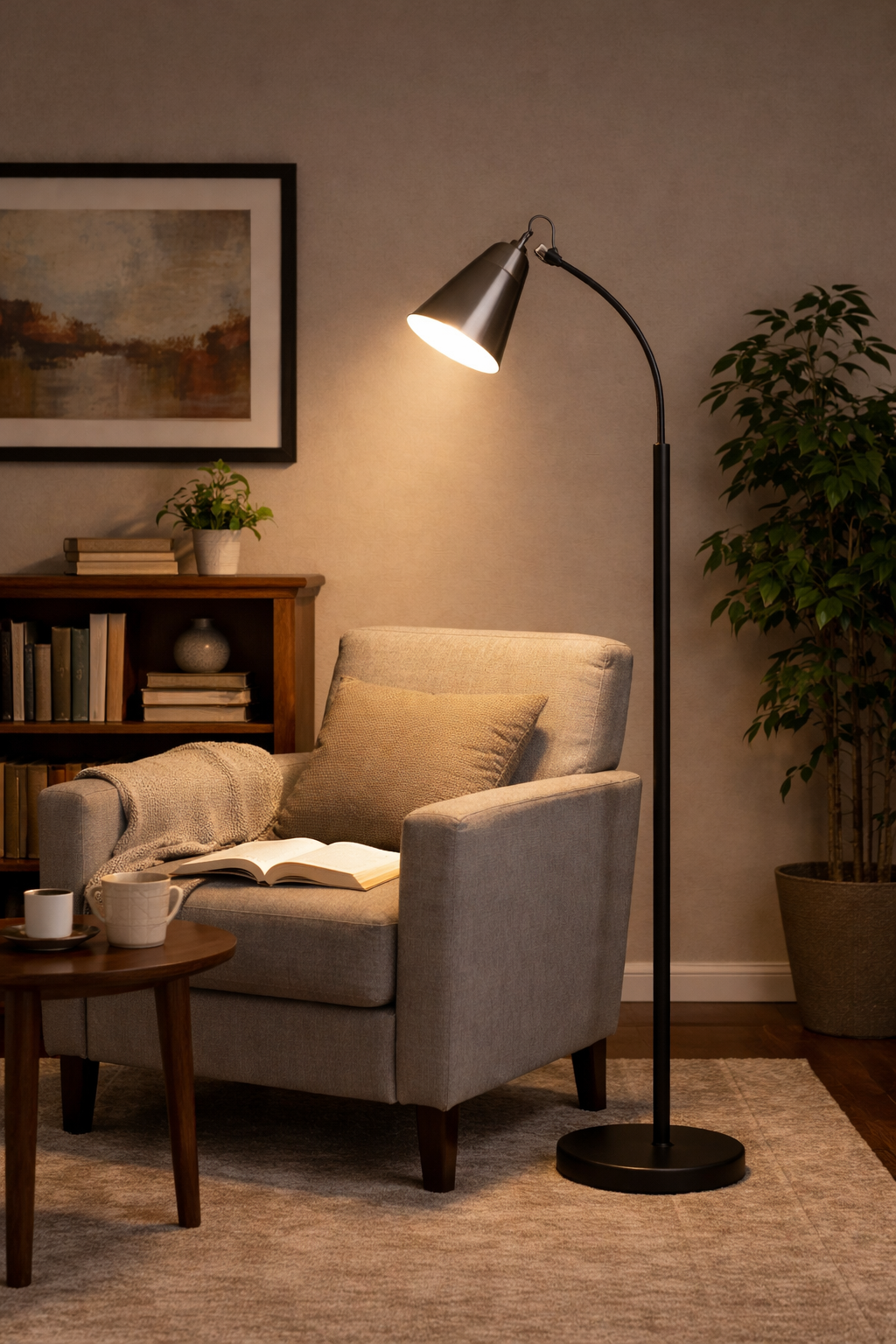
Modern Adjustable Arc Floor Lamp
Price: $65 - $115 Best For: Reading corners, over-sofa lighting, flexible task lighting
Why This Brightens Your Space: This elegant lamp provides focused light exactly where you need it without cluttering tables. The arching design reaches over seating areas, creating a floating effect that's both functional and sculptural. I love how it eliminates the need for side tables in tight spaces.
Pros: ✅ Adjustable height and angle for perfect positioning ✅ Heavy weighted base ensures stability ✅ Dimmer switch included for ambiance control ✅ Modern design complements multiple styles ✅ LED bulb compatible (energy-efficient)
Cons: ❌ Requires corner placement due to size ❌ Base can be tripping hazard in busy walkways ❌ Premium models cost significantly more
My Take: This is one of those pieces that makes your living room feel professionally designed. The focused light is perfect for evening reading while the sculptural form adds architectural interest. Choose matte black for modern spaces or brushed brass for warmer aesthetics.
👉 Compare Prices & Finishes Available on Amazon
Lighting Tips That Make Immediate Difference
Warm vs Cool Light:
- Warm light (2700-3000K): Cozy, relaxing, ideal for living rooms
- Cool light (5000-6500K): Energizing, better for task areas
- My recommendation: Warm white for living rooms always
Strategic Placement:
- Place lamps in room corners to eliminate dark spots
- Use uplighting (light directed toward ceiling) to make ceilings feel higher
- Position floor lamps behind furniture, not in walkways
- Install dimmers on all controllable lights for flexibility
Budget Lighting Hack: Can't afford new fixtures? Simply replacing bulbs with warm-toned, higher-wattage options transforms harsh lighting into welcoming ambiance. This $4 upgrade creates a $400 effect.
Area Rugs: The Foundation That Ties Everything Together
Area rugs are the secret weapon in living room decor. The right rug grounds your furniture, defines zones, adds warmth, and absorbs sound.
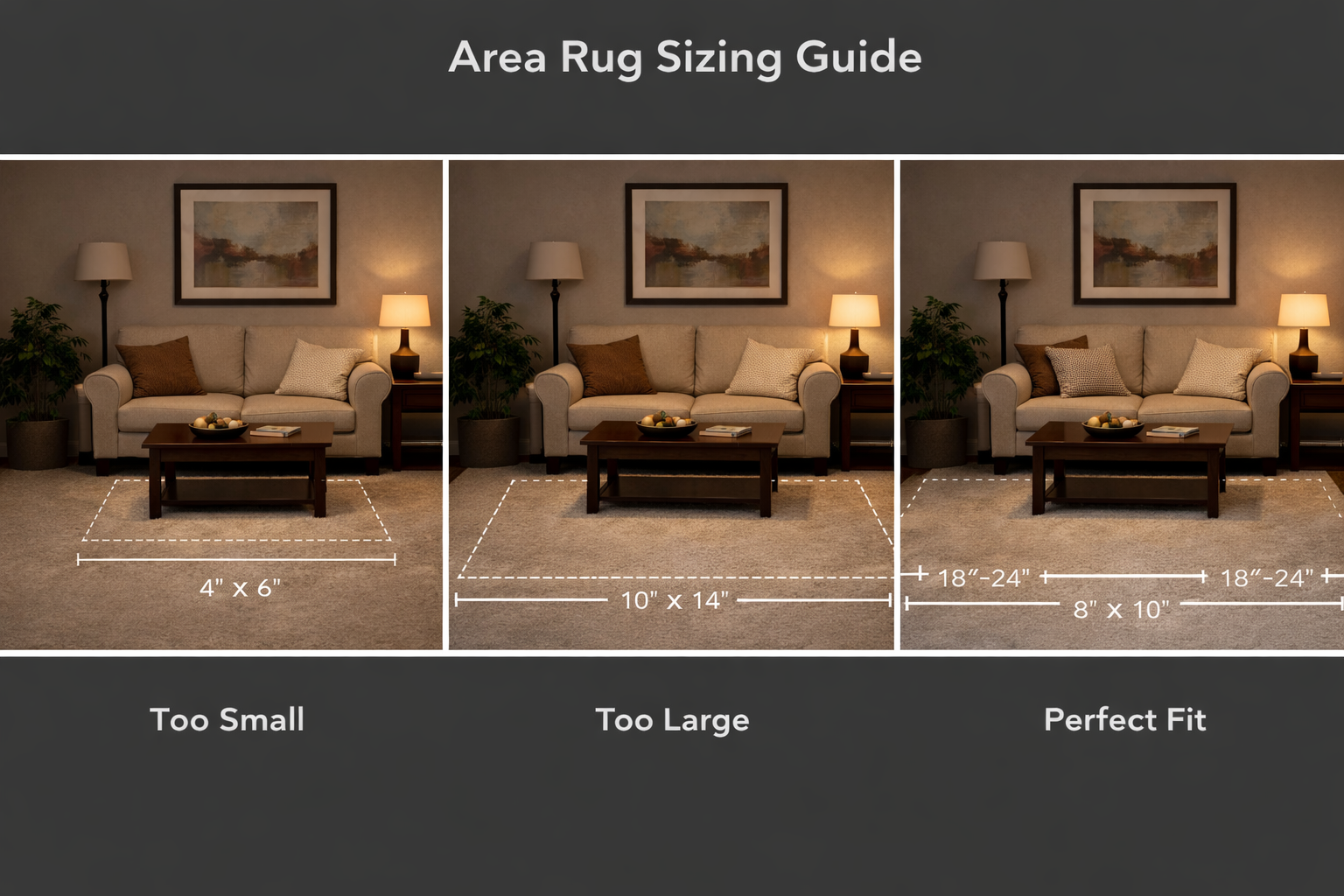
Rug Sizing: The Rules That Matter
Getting size right matters more than you think. Here's my foolproof formula:
Small Living Rooms (Under 12 sqm):
- Rug size: 5x7 feet or 6x9 feet
- Placement: Front furniture legs on rug, back legs off
- Effect: Defines seating area without overwhelming
Medium Living Rooms (12-20 sqm):
- Rug size: 8x10 feet
- Placement: All furniture front legs on rug
- Effect: Anchors furniture grouping naturally
Large Living Rooms (Over 20 sqm):
- Rug size: 9x12 feet or larger
- Placement: All furniture legs entirely on rug
- Effect: Creates cohesive, luxurious feel
Critical Rule: Your rug should extend at least 6 inches beyond furniture on all sides, or have furniture legs resting on it. Rugs that are too small make rooms feel disjointed and cheap.
Material Matters
Wool Rugs (Premium choice)
- Pros: Durable, natural, luxurious feel, resists stains
- Cons: Higher cost ($190-540)
- Best for: High-traffic areas, long-term investment
Cotton Rugs (Budget-friendly)
- Pros: Affordable ($50-115), machine washable, lightweight
- Cons: Shows wear faster, less durable
- Best for: Rentals, temporary spaces, frequent style changes
Synthetic (Polypropylene) Rugs (Popular middle ground)
- Pros: Stain-resistant, affordable ($62-190), easy maintenance
- Cons: Less luxurious feel than natural fibers
- Best for: Families with kids, pet owners, practical choice
Jute/Sisal Rugs (Natural texture)
- Pros: Eco-friendly, adds organic texture, neutral
- Cons: Rough texture, stains easily, harder to clean
- Best for: Layering, low-traffic areas, boho/natural styles
Featured Area Rug
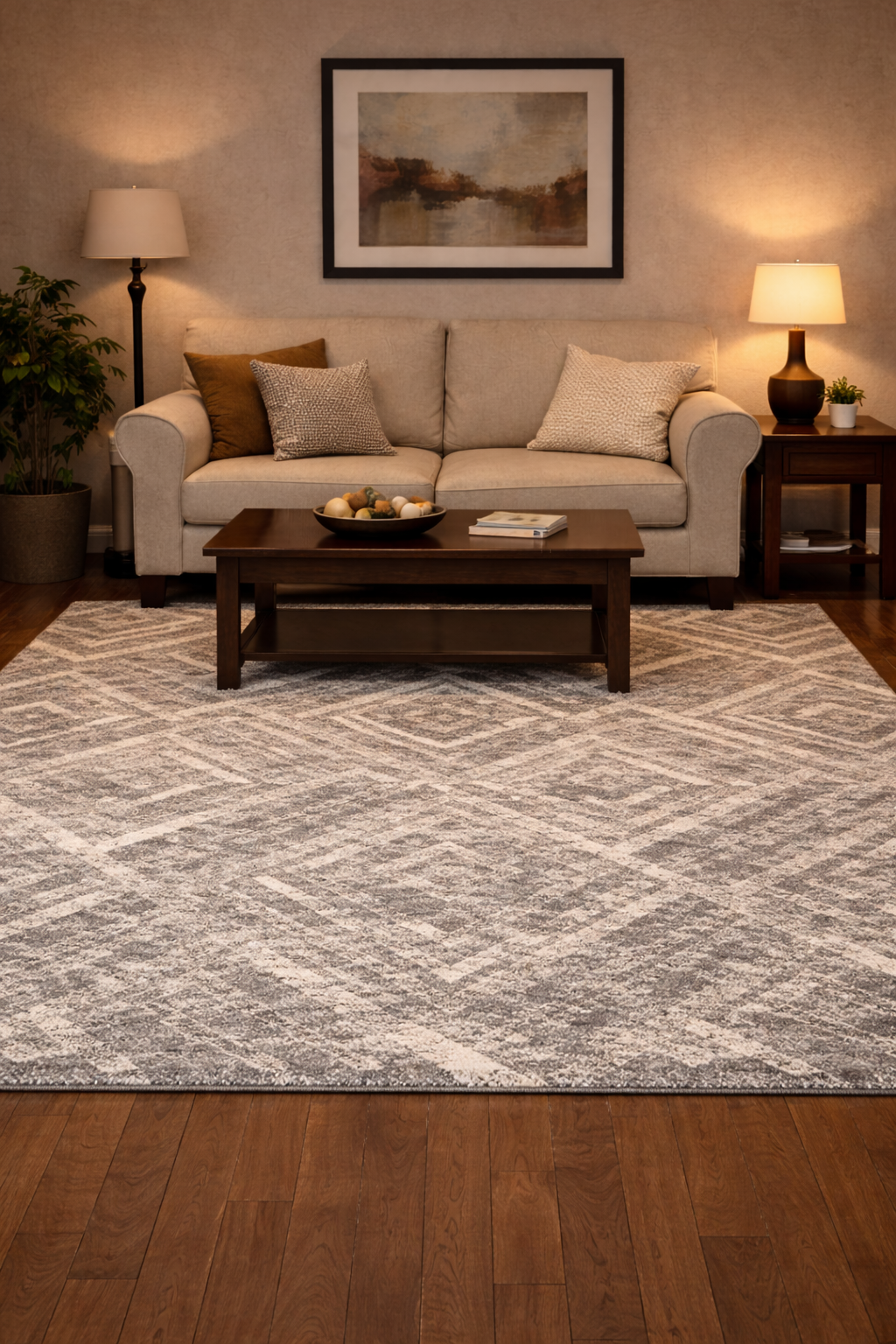
Modern Geometric Area Rug - 8x10 Feet
Price: $140 - $270 (depending on material quality) Best For: Medium living rooms, contemporary or transitional styles
Why This Grounds Your Space: This versatile rug features a subtle geometric pattern that adds visual interest without overwhelming your decor. The low-pile construction makes furniture placement easy while the neutral color palette (gray, cream, beige options) works with any existing color scheme.
Pros: ✅ Low-pile design easy to clean and vacuum ✅ Non-slip backing included ✅ Stain-resistant synthetic fibers ✅ Pattern hides dirt between cleanings ✅ Neutral colors never go out of style
Cons: ❌ Synthetic feel less luxurious than wool ❌ May require rug pad for extra cushioning ❌ Edges can curl initially (flattens over time)
My Take: This is the rug I recommend most often because it delivers professional results at a reasonable price point. The geometric pattern adds sophistication while the practical synthetic material stands up to real life. I've had mine for three years and it still looks nearly new.
👉 View Colors & Check Availability on Amazon
Texture and Layers: Creating Depth and Coziness
Living rooms that feel professionally designed always have one thing in common: layered textures. This is where your space transforms from "nice" to "wow."
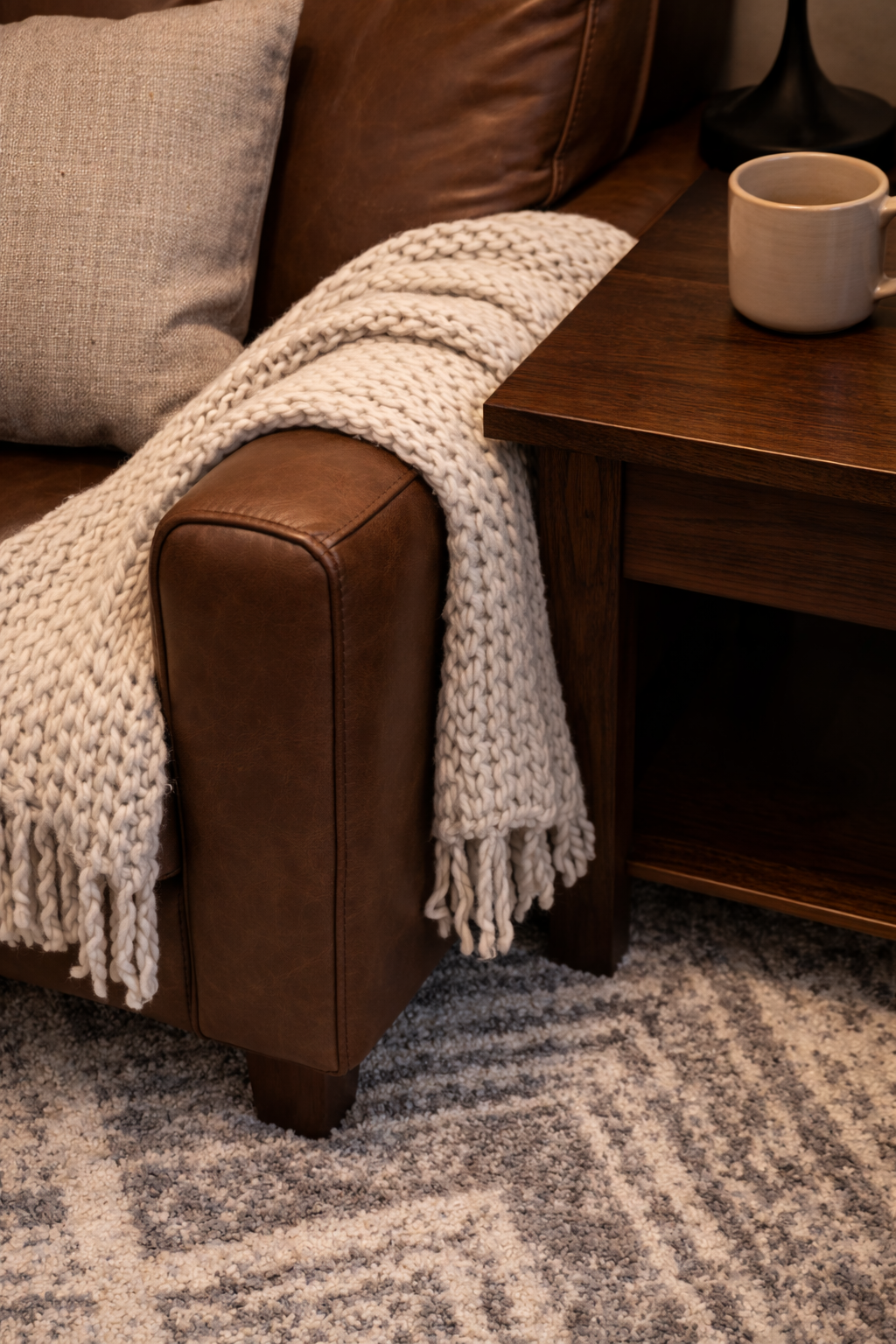
The Texture Strategy
Mix at least 4-5 different textures in your living room:
- Smooth (leather, polished wood, glass)
- Soft (velvet, chenille, microfiber)
- Rough (jute, sisal, stone)
- Woven (baskets, macramé, rattan)
- Knitted (chunky throws, cable-knit pillows)
Why This Matters: A room with only smooth surfaces feels cold and sterile. Adding varied textures creates visual interest and makes spaces feel warmer and more inviting, even if your color palette is minimal.
Throw Pillows: The Instant Transformation
Throw pillows are the easiest, most affordable way to refresh your living room. Here's how to do it right:
The Odd Number Rule: Use 3, 5, or 7 pillows on a sofa—never even numbers. Odd groupings feel more natural and styled.
Size Variation:
- 2 large pillows (20x20 or 22x22 inches) in corners
- 2 medium pillows (18x18 inches) center
- 1 small lumbar pillow (12x20 inches) for visual interest
Pattern Mixing Formula:
- 1 solid color pillow (your dominant color)
- 1 large-scale pattern pillow (geometric, floral, or abstract)
- 1 small-scale pattern pillow (stripes, dots, or texture)
- Ensure all patterns share at least one common color
Featured Throw Pillow Set
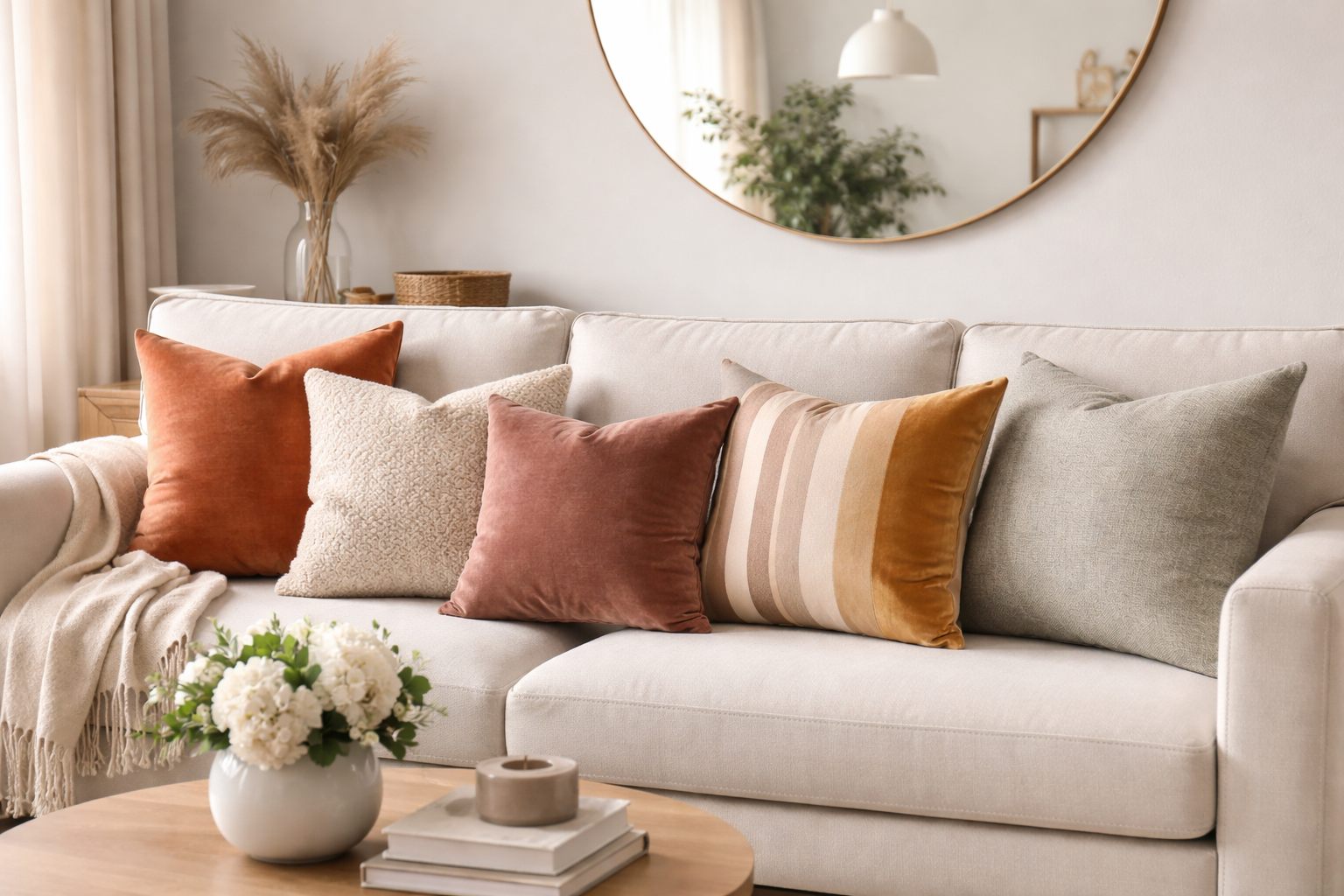
Luxury Velvet & Linen Throw Pillow Set (5 Pieces)
Price: $35 - $58 for complete set Best For: Quick living room refresh, seasonal updates, adding luxury feel
Why These Elevate Your Sofa: This curated set takes the guesswork out of pillow coordination. The mix of velvet and linen textures creates sophisticated contrast while the coordinated color palette (available in multiple schemes) ensures professional-looking results. Hidden zippers and quality inserts mean these look good for years.
Pros: ✅ Pre-coordinated colors and patterns ✅ Mix of velvet and natural linen textures ✅ Removable, machine-washable covers ✅ High-quality inserts included (not sold separately) ✅ Transforms space in 5 minutes
Cons: ❌ Limited to set combinations (less customization) ❌ Velvet shows seating impressions ❌ May fade with direct sunlight exposure
My Take: I bought this set when I needed a quick refresh before guests arrived, and I never switched back to my previous pillows. The quality rivals sets costing twice as much, and swapping pillow sets seasonally keeps my living room feeling fresh without major investment.
👉 See Color Combinations Available on Amazon
Throws and Blankets
A throw blanket casually draped over your sofa arm or folded in a basket adds instant coziness. Here's my layering approach:
Summer:
- Light cotton or linen throws
- Neutral colors (cream, light gray)
- Breathable for air-conditioned spaces
Winter:
- Chunky knit or fleece throws
- Warm colors (burgundy, navy, forest green)
- Extra warmth for chilly evenings
Year-Round:
- Medium-weight cotton-blend
- Versatile neutral (gray, beige)
- Easy to wash and maintain
Styling Tip: Don't fold throws perfectly. A slightly messy, lived-in drape looks more inviting than rigid perfection.
Wall Decor: From Blank Canvas to Gallery Wall
Empty walls make even beautiful rooms feel unfinished. Here's how to fill wall space with purpose.
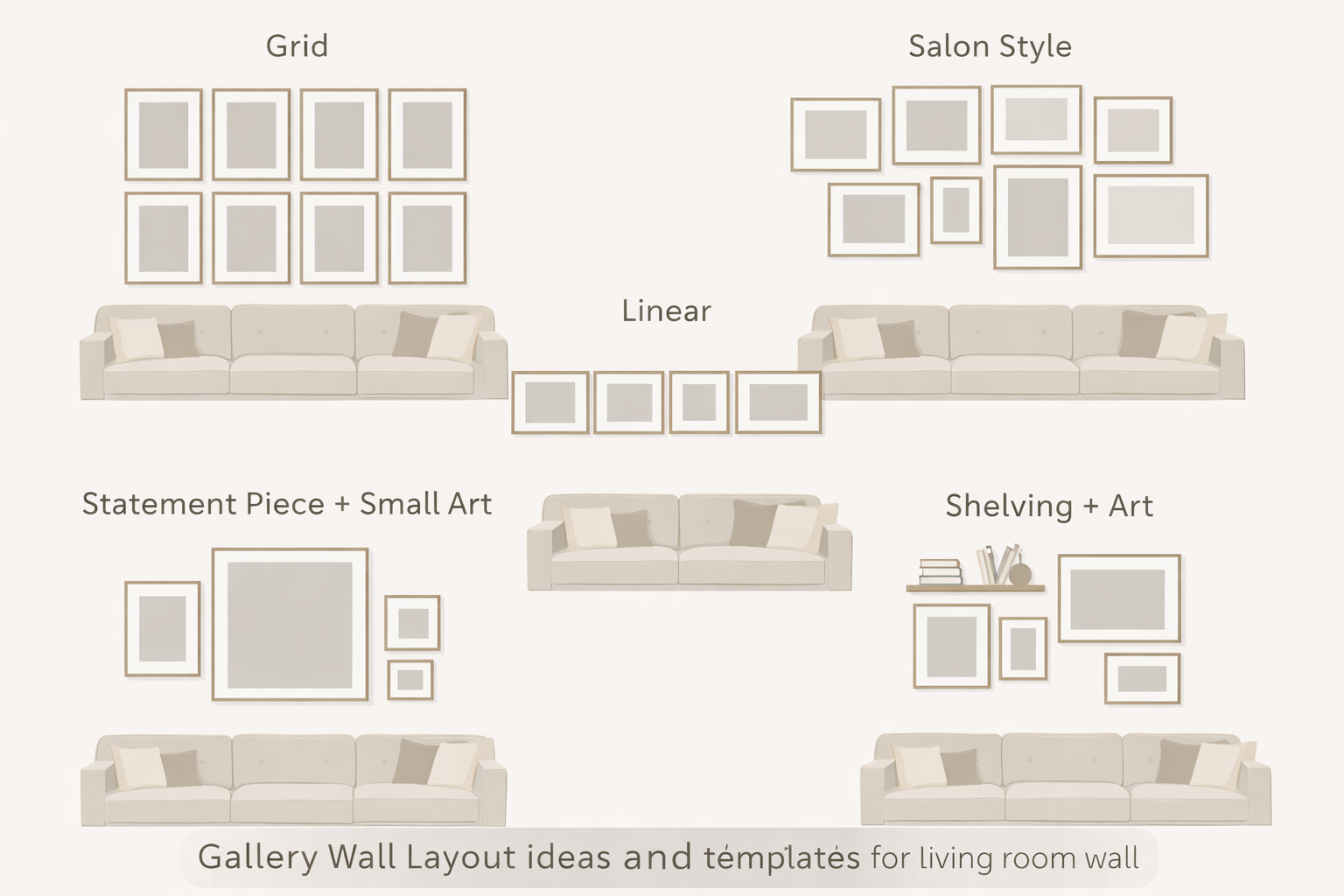
Gallery Wall Success Formula
Gallery walls intimidate many people, but they're easier than you think with this process:
Step 1: Choose Your Layout
- Grid: Clean, modern, equal spacing (perfect for same-size frames)
- Salon Style: Organic, varied sizes, asymmetrical (traditional elegance)
- Linear: Horizontal or vertical line (simple, contemporary)
- Statement + Supporting: One large piece surrounded by smaller art
Step 2: Plan Before Hammering Cut paper templates of your frames and tape them to the wall. Move them around until you love the arrangement. This prevents the "swiss cheese wall" of extra holes.
Step 3: The Center Line Gallery walls should center at eye level (approximately 57-60 inches from floor to center of arrangement). This professional standard makes any arrangement look intentional.
Step 4: Spacing That Works Maintain 2-3 inches between frames. Closer feels cluttered, wider feels disconnected.
What to Hang
Mix These Types:
- Family photos (but not only family photos—balance personal with decorative)
- Abstract art prints
- Botanical prints
- Mirrors (reflect light and expand space)
- Textured pieces (woven wall hangings, 3D art)
Frame Consistency: Either match all frames (cohesive look) or vary frames but keep one element consistent—finish color, style, or matting.
Budget-Friendly Art Sources:
- Print digital art from online marketplaces ($4-15)
- Frame beautiful fabric remnants
- DIY abstract paintings (YouTube tutorials)
- Thrift vintage prints and reframe them
- Nature photography (your own or stock photos)
Storage Solutions: Beautiful and Functional
Living room clutter destroys carefully planned decor. Strategic storage keeps things organized while enhancing your design.
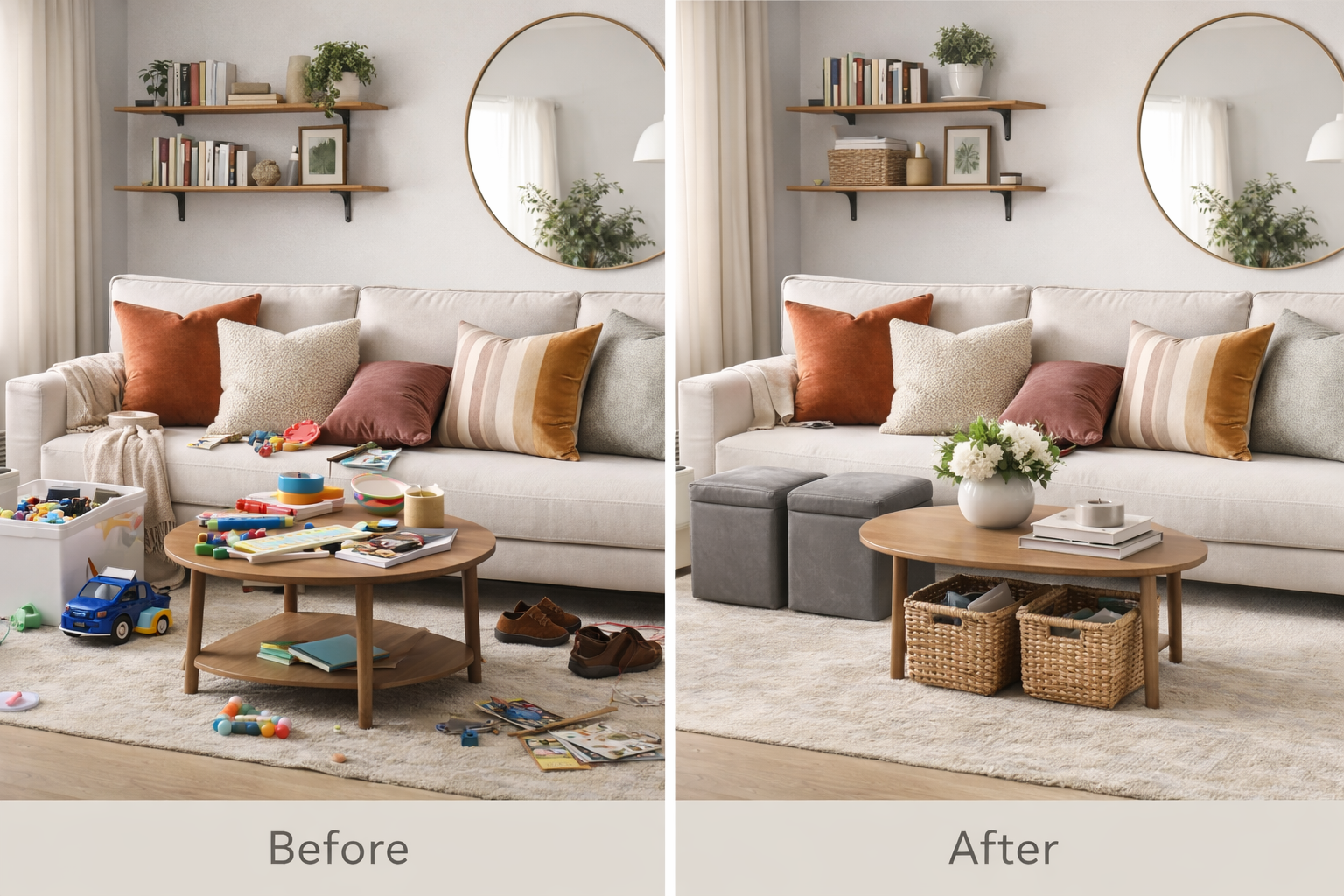
Hidden Storage Strategies
Storage Ottoman (Featured Earlier) Beyond seating, these hide:
- Remote controls
- Magazines and books
- Throw blankets
- Kids' toys
- Board games
TV Unit with Closed Cabinets Open shelving looks pretty initially but creates visual clutter. TV units with closed storage hide:
- Media equipment
- DVDs and game consoles
- Cables and chargers
- Entertainment accessories
Floating Shelves (Instead of Floor Furniture) Maximize vertical space without footprint:
- Display decorative items
- Store books
- Showcase plants
- Create visual interest on empty walls
Featured Storage Solution
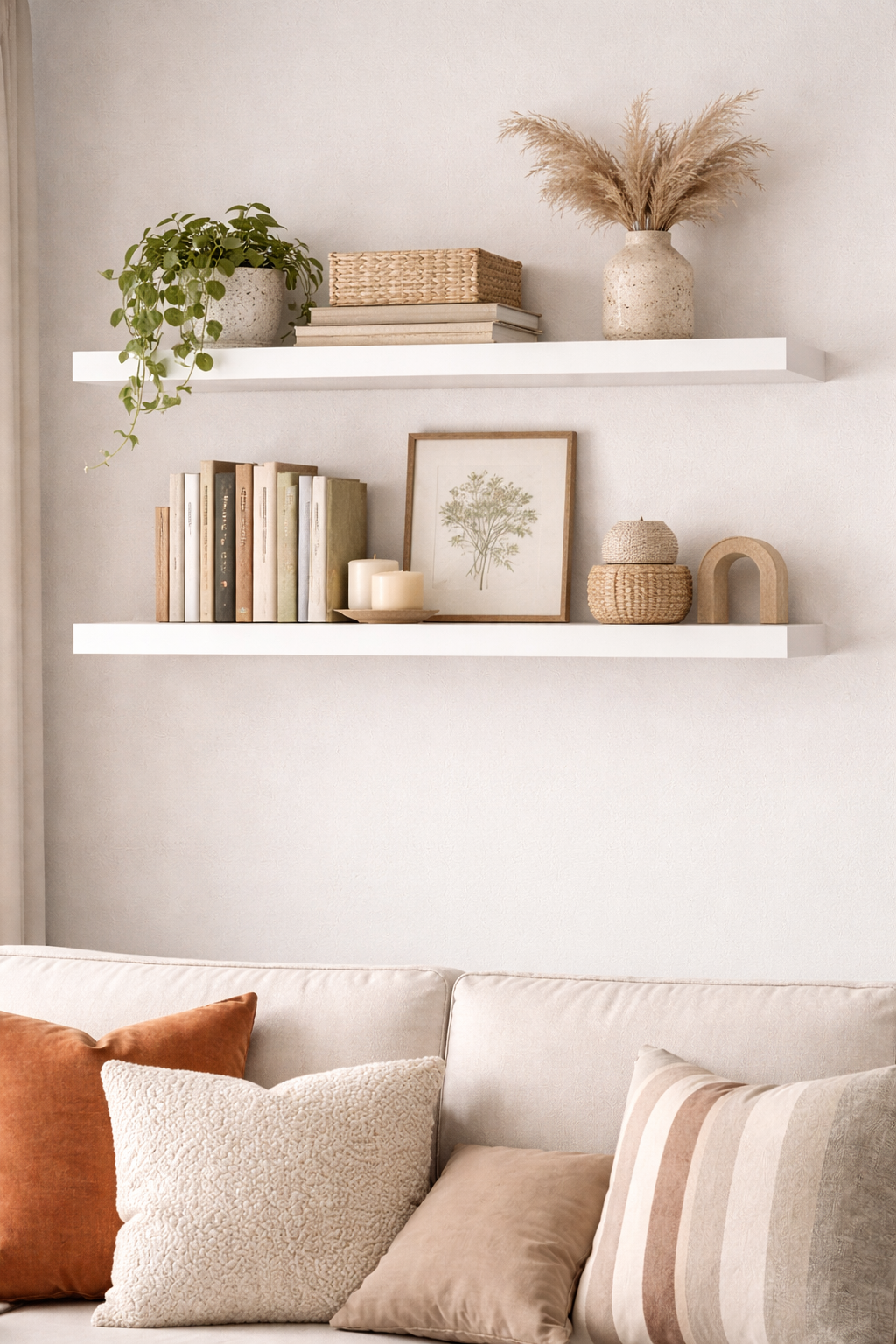
Modern Floating Shelf Set (3 Shelves)
Price: $25 - $65 (depending on material and size) Best For: Display and storage without floor space, renters (easy removal), small living rooms
Why This Maximizes Space: These clean-lined shelves create storage and display area without consuming precious floor space. The invisible mounting system creates a floating effect that looks expensive and modern. I particularly appreciate how they draw the eye upward, making rooms feel taller.
Pros: ✅ No floor footprint in small spaces ✅ Easy installation with included hardware ✅ Supports significant weight (books, plants, decor) ✅ Available in multiple finishes (white, walnut, black) ✅ Damage-free removal for renters
Cons: ❌ Requires proper wall anchoring for safety ❌ Not suitable for very heavy items without reinforcement ❌ Open storage shows everything (requires thoughtful styling)
My Take: I installed these in my own living room and never looked back. The trick is styling them thoughtfully—group items in odd numbers, vary heights, and leave some empty space for the eye to rest. They're particularly perfect for apartments where floor space is precious.
👉 Check Available Sizes & Finishes on Amazon
Basket Storage
Decorative baskets are your secret weapon against visible clutter:
- Woven seagrass baskets: Natural, textural, perfect for throws and pillows
- Wire baskets: Industrial look, good for magazines
- Fabric bins: Soft-sided, collapsible, great for kids' toys
Placement Strategy:
- Under console tables
- Beside sofas
- On lower shelves
- In corners
Plants: Bringing Life Into Your Living Room
Indoor plants are non-negotiable in modern living room decor. They purify air, add color, create visual interest, and literally bring life into your space.
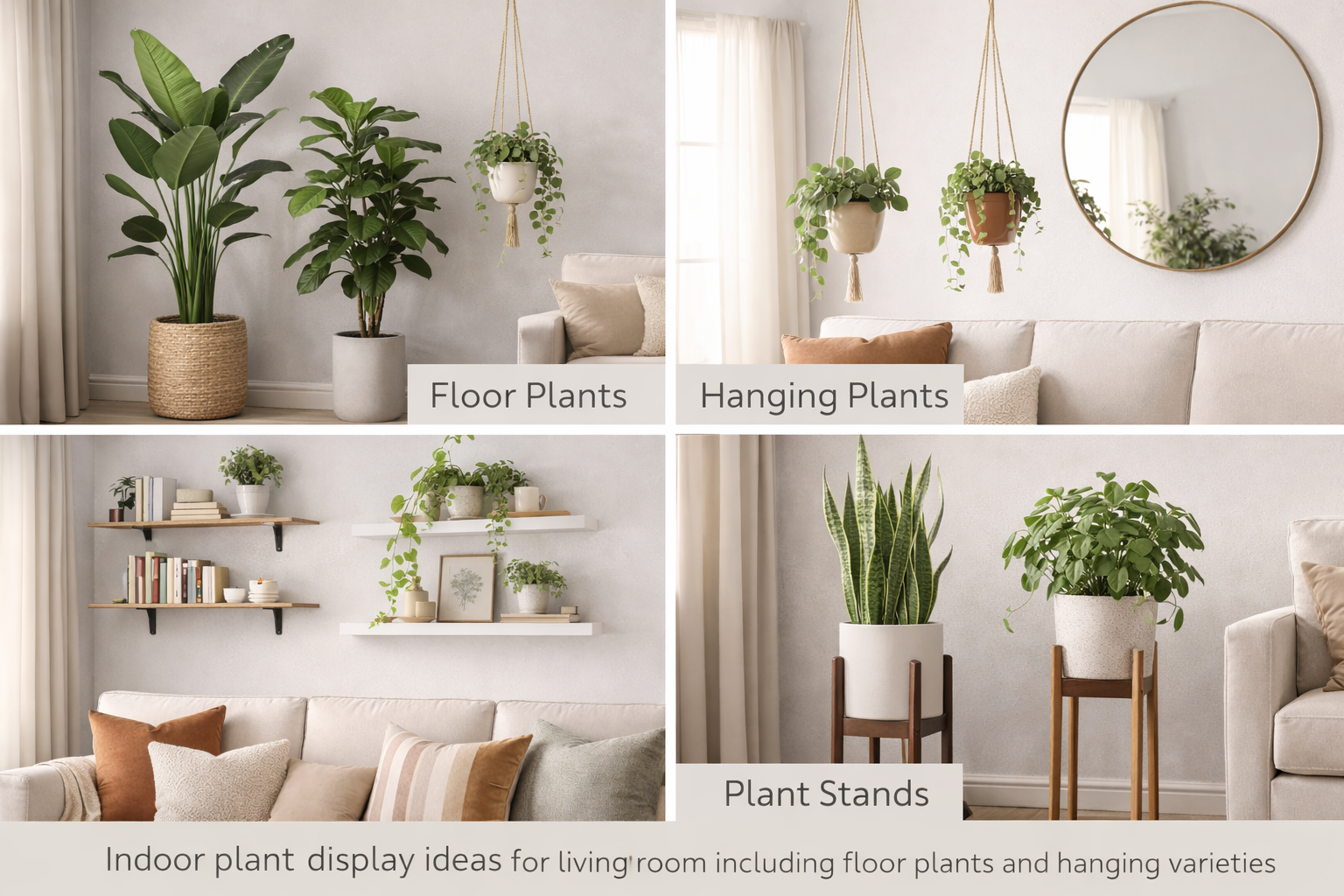
Best Low-Maintenance Plants for Living Rooms
Snake Plant (Sansevieria)
- Why it works: Tolerates low light, needs water every 2-3 weeks, purifies air
- Placement: Corners, beside TV units, on plant stands
- Cost: $6 - $23 depending on size
- Buy Snake Plant →
Pothos (Devil's Ivy)
- Why it works: Thrives in indirect light, trailing vines add softness, nearly indestructible
- Placement: Hanging planters, high shelves where vines cascade
- Cost: $4 - $12
ZZ Plant (Zamioculcas zamiifolia)
- Why it works: Glossy leaves, drought-tolerant, grows in low light
- Placement: Floor plants in corners, on side tables
- Cost: $9 - $31
Rubber Plant (Ficus elastica)
- Why it works: Large dramatic leaves, air purifying, statement piece
- Placement: Floor plant as focal point, beside windows
- Cost: $15 - $42
Monstera Deliciosa
- Why it works: Trendy split leaves, grows large, tropical feel
- Placement: Floor plant in bright indirect light, statement corner
- Cost: $19 - $54
Plant Styling Tips
Grouping Rule: Cluster plants in odd numbers (3 or 5) at varying heights. Use plant stands to create elevation differences.
Pot Coordination: Choose pots in complementary colors or materials:
- All white/cream pots (clean, modern)
- All terracotta (warm, natural)
- All woven baskets (boho, textural)
- Mixed materials but consistent style
Care Reality Check: Be honest about your plant care commitment. If you travel frequently or forget to water, stick with hardy varieties like snake plants and ZZ plants. Don't set yourself up for failure with high-maintenance varieties.
Featured Plant Bundle
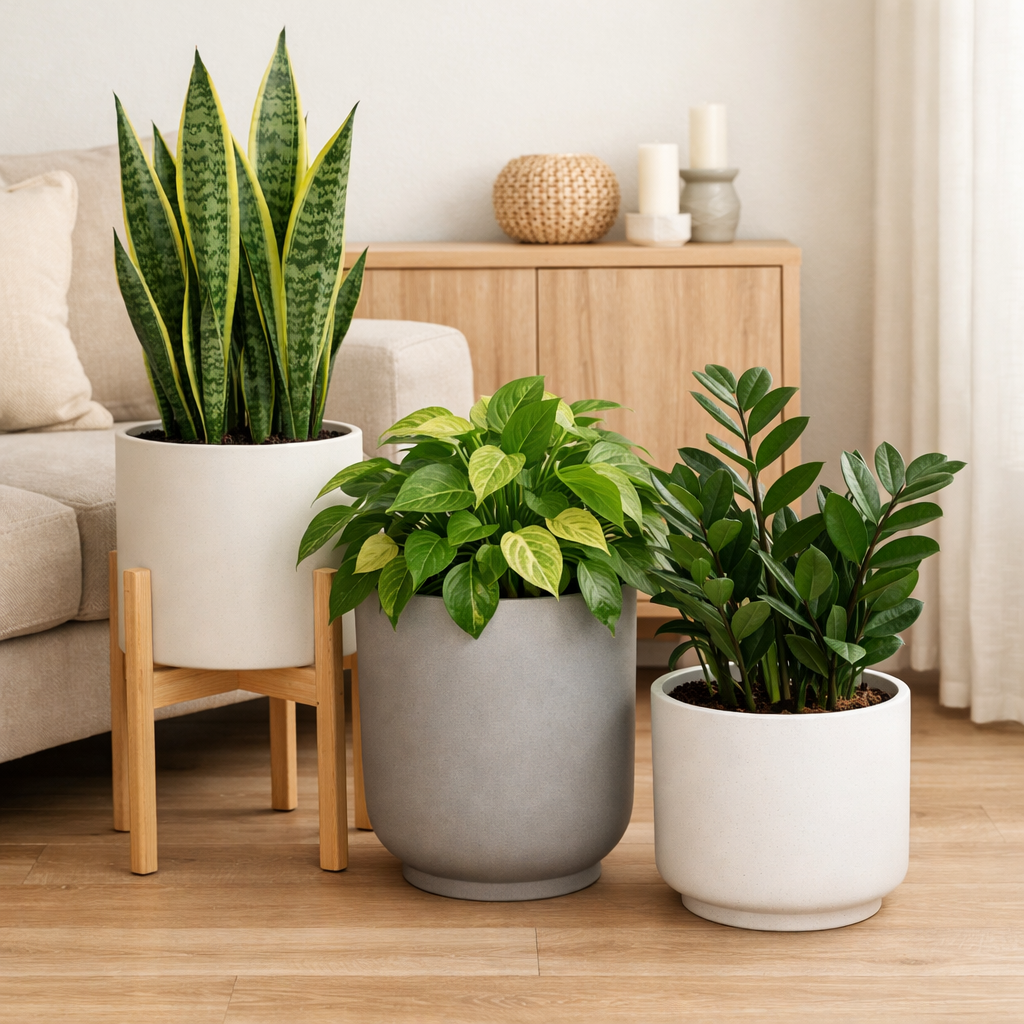
Low-Maintenance Living Room Plant Bundle (3 Plants)
Price: $27 - $38 (includes plants and basic pots) Best For: Plant beginners, low-light living rooms, busy lifestyles
Why This Brings Life to Your Space: This curated trio includes a snake plant, pothos, and small ZZ plant—all proven survivors that tolerate neglect better than most. The varied heights and leaf shapes create visual interest while the minimal care requirements mean they'll actually thrive instead of dying within weeks.
Pros: ✅ All plants tolerate low light conditions ✅ Water every 2-3 weeks (hard to overwater) ✅ Air-purifying benefits for indoor air quality ✅ Different textures and heights for visual variety ✅ Basic pots included (upgrade pots as desired)
Cons: ❌ Basic plastic pots need upgrading for aesthetic appeal ❌ Slow growth (patience required) ❌ Toxic to pets if ingested (choose pet-safe alternatives if needed)
My Take: This is the bundle I recommend to everyone starting their plant journey. These three varieties have survived my frequent travels, inconsistent watering, and less-than-ideal lighting. Two years later, they're still thriving. Start here and expand as you gain confidence.
👉 Get Your Plant Bundle on Amazon
Small Living Room Strategies That Actually Work
Small living rooms present unique challenges, but with smart strategies, they can feel spacious and stylish.
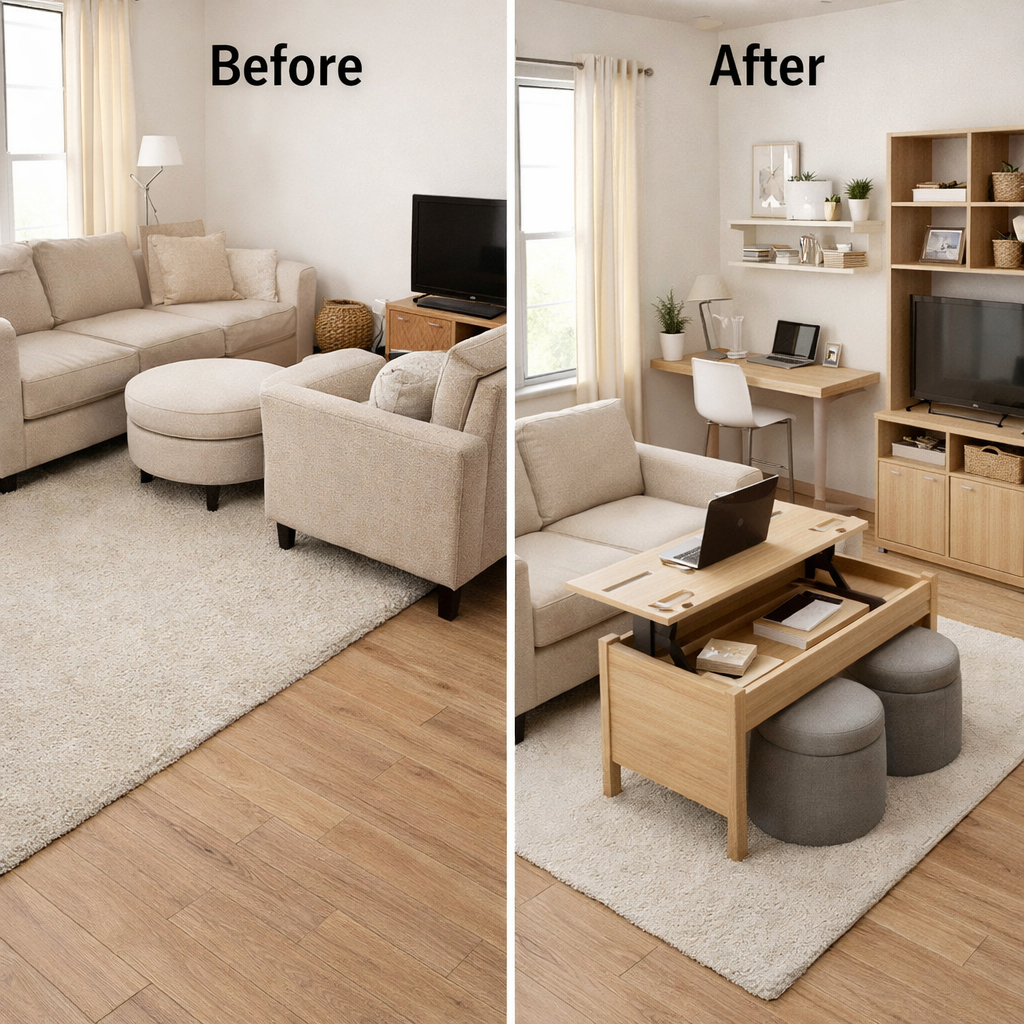
Space-Maximizing Furniture Choices
Multifunctional Pieces Are Essential:
- Sofa beds (guests stay without dedicated guest room)
- Storage ottomans (seating + storage + coffee table)
- Nesting tables (expand when needed, stack when not)
- Wall-mounted TV units (floor space stays clear)
Scale Matters:
- Choose furniture with exposed legs (creates airflow underneath, feels lighter)
- Avoid bulky, oversized pieces that overwhelm
- Consider armless chairs (take less visual space)
- Select sofas with low backs (don't block views)
Furniture Arrangement for Small Spaces:
- Float furniture away from walls (counterintuitive but creates flow)
- Angle furniture pieces (breaks up rigid box shape)
- Use vertical space aggressively (tall shelves, wall-mounted storage)
- Keep traffic paths clear (minimum 24 inches walking space)
Visual Tricks That Expand Small Spaces
Mirrors Strategically Placed:
- Opposite windows (reflects natural light)
- Above sofas (creates depth)
- Leaning floor mirrors (adds height, doesn't require wall mounting)
Light Colors Dominate:
- White or pale walls reflect light
- Light-colored furniture keeps airiness
- Save dark colors for small accent pieces
Monochromatic Color Schemes:
- Variations of one color create seamless flow
- Example: Cream walls, beige sofa, tan pillows, light wood accents
- Reduces visual clutter from too many competing colors
Consistent Flooring:
- Don't break up floor with multiple rugs
- One large rug or no rug better than several small ones
- Creates uninterrupted floor space
What to Avoid in Small Living Rooms
❌ Heavy, dark curtains (use sheer whites or light neutrals) ❌ Clutter on surfaces (clear counters and tables frequently) ❌ Too many small decorative items (edit ruthlessly) ❌ Large patterns (use solid colors or small-scale patterns) ❌ Low lighting (maximize natural and artificial light)
Budget-Friendly Living Room Makeover Tips
Living room decor doesn't require massive budgets. Here's how to transform your space affordably.
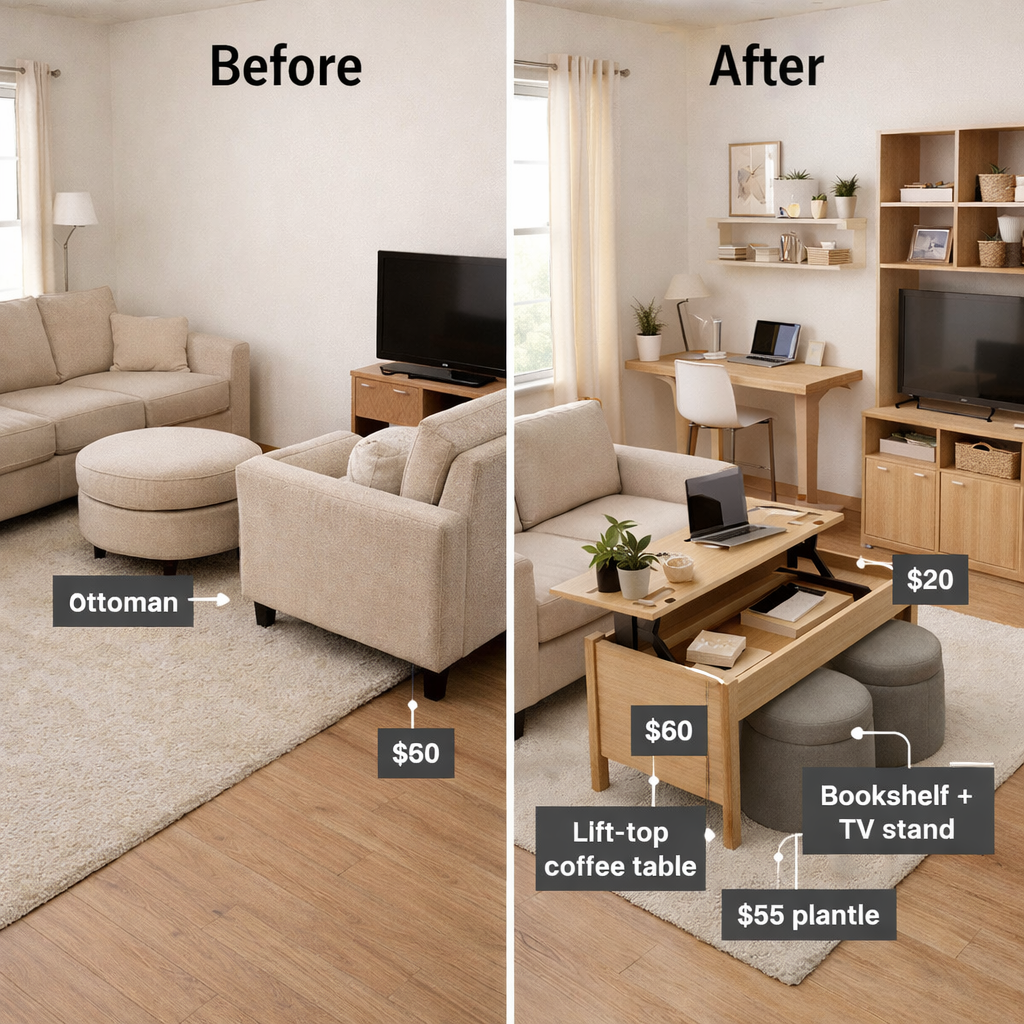
High-Impact, Low-Cost Changes
Paint ($23 - $62 per room) Single biggest transformation for smallest investment. Choose:
- Light neutral walls (expands space)
- Accent wall in bold color (creates focal point)
- Ceiling paint (make room feel taller with white ceiling) Shop Interior Paint →
Rearrange Existing Furniture (Free) Before buying anything, try different arrangements. Move pieces around, angle furniture differently, create conversation zones. You'll be surprised how much this changes the feel.
Declutter and Organize (Free) Remove 50% of items from surfaces. Store or donate items you don't use regularly. Clear space feels larger and more expensive.
Add Mirrors ($19 - $92) One large mirror makes dramatic impact:
- Reflects light (brightens space)
- Creates depth illusion (makes room feel larger)
- Acts as statement art piece Shop Wall Mirrors →
Update Throw Pillows ($22 - $58 for set) Fastest way to refresh color scheme and style without furniture changes. Change seasonally for continued freshness. Get Pillow Sets →
Swap Light Bulbs ($4 - $15) Replace harsh cool-white bulbs with warm-toned, higher-wattage options. Instant ambiance upgrade for minimal cost. Buy Warm White LEDs →
DIY Artwork ($12 - $38)
- Canvas and acrylic paints for abstract art
- Print digital art and frame it
- Frame beautiful fabric
- Create gallery wall with thrifted frames Get Art Supplies →
Shopping Smart: Where to Find Deals
Global Shopping Strategy:
- Major furniture retailers: Compare prices across IKEA, Wayfair, Amazon, and local stores
- Online marketplaces: Check multiple sites before buying to find best deals
- End-of-season sales: Buy winter textiles in summer, summer items in winter
- Clearance sections: Floor models and discontinued styles offer huge discounts (20-40% off)
- Local artisans and small businesses: Support local craftspeople for unique pieces at fair prices
Timing Matters:
- January sales (post-holiday clearance)
- July sales (mid-year clearance)
- Black Friday/Cyber Monday (November)
- Presidents Day sales (February - U.S.)
- Labor Day sales (September - U.S.)
Budget Allocation Guide
If you have $385 total budget, allocate:
- 40% ($154): Sofa or main seating
- 20% ($77): Coffee table
- 15% ($58): Lighting (1-2 lamps)
- 10% ($38): Textiles (rug, pillows, throw)
- 10% ($38): Decor and accessories
- 5% ($19): Plants and pots
This ratio ensures you invest in pieces you use most while still completing the look.
Seasonal Decor Updates
Keep your living room feeling fresh by incorporating seasonal touches without complete overhauls.
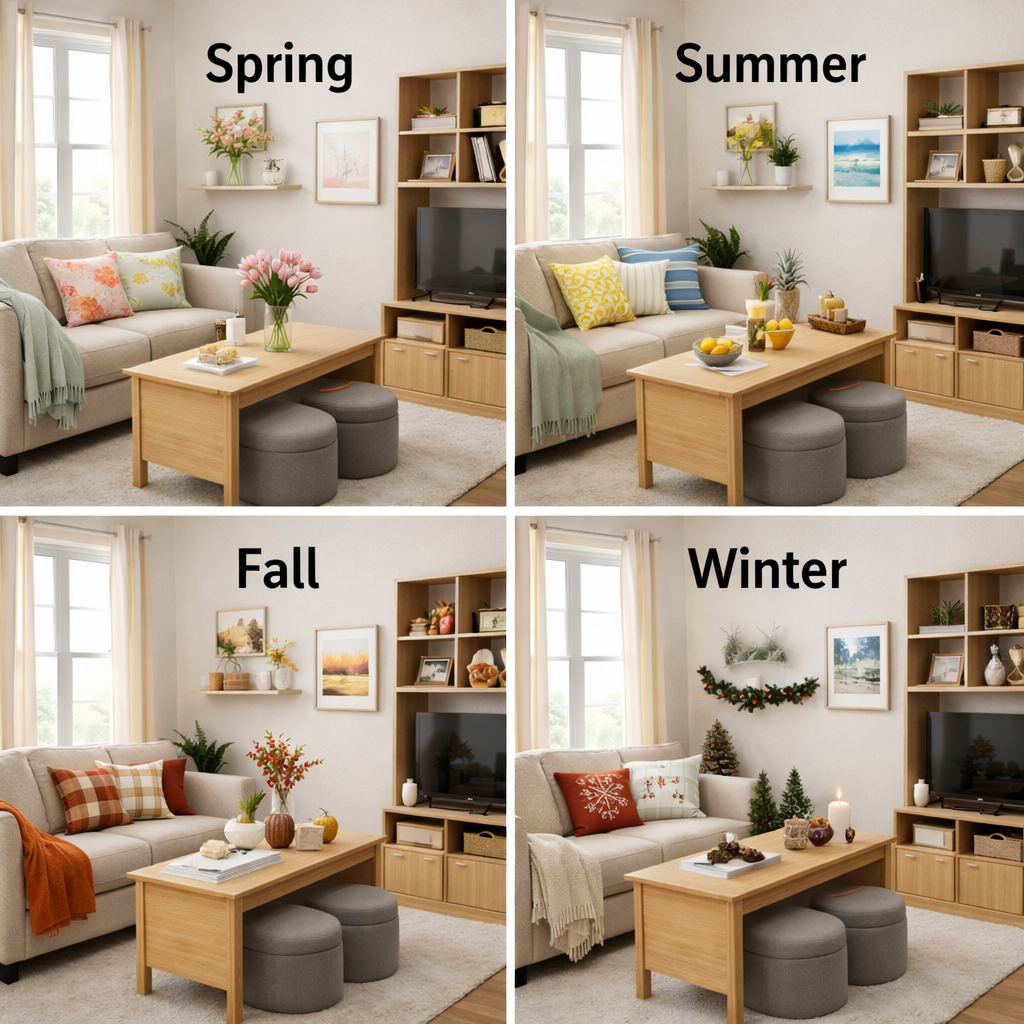
Spring Refresh (March - May)
Color Palette: Soft pastels, fresh greens, whites Updates:
- Swap heavy throws for light cotton blankets
- Add fresh flowers in vases
- Replace dark pillows with light blues, pinks, yellows
- Open curtains for maximum natural light
- Add potted spring bulbs
Budget: $19 - $38
Summer Vibes (June - August)
Color Palette: Bright whites, ocean blues, coral accents Updates:
- Remove extra throws and blankets
- Add tropical plants
- Use lightweight linen textiles
- Display seashells or beach-themed decor
- Incorporate woven natural materials
Budget: $15 - $35
Autumn Warmth (September - November)
Color Palette: Rust, burnt orange, deep greens, browns Updates:
- Layer textured throws on sofas
- Add warm-toned pillows
- Display autumn leaves or branches
- Incorporate copper or brass accents
- Use candles for cozy ambiance
Budget: $23 - $46
Winter Coziness (December - February)
Color Palette: Deep burgundy, forest green, cream, gold Updates:
- Add chunky knit throws Shop Chunky Throws →
- Layer rugs for extra warmth
- Use heavier curtains
- Display evergreen branches
- Add fairy lights for ambiance
- Incorporate velvet textures
Budget: $27 - $54
Pro Tip: Store seasonal items in labeled bins so rotation next year is effortless. You'll save time and money by not repurchasing items you already own.
Common Living Room Decor Mistakes (And How to Avoid Them)
Learn from others' mistakes so you don't waste money or time on these common errors.
Mistake #1: Buying Furniture Before Measuring
The Problem: Furniture that's too large or too small ruins proportions and functionality.
The Solution:
- Measure your room dimensions precisely
- Create a floor plan (use free apps or graph paper)
- Tape furniture outlines on floor to visualize scale
- Add 36 inches around seating for walking paths
Mistake #2: Neglecting Lighting Until the End
The Problem: Poor lighting makes beautiful furniture look cheap and rooms feel cold.
The Solution:
- Plan lighting as you design the room, not after
- Include all three lighting layers (ambient, task, accent)
- Install dimmers for flexibility
- Use warm-toned bulbs (2700-3000K) in living spaces
Mistake #3: Pushing All Furniture Against Walls
The Problem: Creates awkward conversation distance and makes rooms feel rigid.
The Solution:
- Pull furniture 6-12 inches from walls
- Create intimate conversation groupings
- Use furniture to define zones in open plans
- Maintain clear traffic paths
Mistake #4: Choosing Style Over Comfort
The Problem: A beautiful sofa you bought yet hate sitting on isn't serving its purpose.
The Solution:
- Test furniture in person when possible
- Sit for at least 5 minutes before buying
- Consider your daily activities (movie watching, reading, napping)
- Choose stain-resistant, durable fabrics for real life
Mistake #5: Matching Everything Perfectly
The Problem: Matchy-matchy rooms feel sterile and lack personality.
The Solution:
- Mix finishes (combine metals, wood tones)
- Vary textures significantly
- Use different but complementary colors
- Include pieces from different eras or styles
Mistake #6: Hanging Art Too High
The Problem: Art placed too high feels disconnected from furniture and requires neck strain to view.
The Solution:
- Center art at 57-60 inches from floor (eye level)
- Position 6-8 inches above sofa backs
- Gallery walls should center at eye level overall
- Lower art slightly in spaces where people sit
Mistake #7: Ignoring Scale and Proportion
The Problem: Small coffee table with large sectional, or massive chandelier in small room.
The Solution:
- Coffee table should be 2/3 length of sofa
- Rug should extend at least 6 inches beyond furniture
- Chandelier diameter should be room width + length in feet, converted to inches
- Side tables should match or sit 1-2 inches below sofa arm height
Frequently Asked Questions
Q: How much should I budget for living room decor? A: Budget depends on room size and whether you're starting from scratch or refreshing. For a complete medium living room (130-215 sq ft), expect $615-1,540 for quality furniture and decor. However, you can create beautiful spaces on $385 budgets by prioritizing key pieces and shopping smartly. DIY options and second-hand finds reduce costs significantly.
Q: What's the best color for a small living room? A: Light, neutral colors make small spaces feel larger. White, cream, light gray, or pale beige walls reflect light and create airiness. Add personality through colorful accessories (pillows, art, rugs) that you can change easily. Avoid dark walls in small spaces unless you're deliberately creating a cozy den atmosphere.
Q: How do I make my living room look expensive on a budget? A: Focus on these high-impact tactics: (1) Keep spaces clutter-free and organized, (2) Use cohesive color schemes with the 60-30-10 rule, (3) Add one statement piece like an oversized mirror or dramatic plant, (4) Layer textures with throws and pillows, (5) Upgrade lighting with warm-toned bulbs and multiple light sources, (6) Style surfaces thoughtfully with curated accessories, (7) Ensure proper furniture scale and spacing.
Q: Should I buy a sofa or a sectional? A: Depends on your space and needs. Choose a sectional if: you have a large open-plan space, you entertain frequently, you want to define zones, or your family is large. Choose a sofa if: your room is small to medium, you prefer flexibility to rearrange, you want to add individual chairs, or you're in a rental. Sectionals offer more seating but require commitment to one configuration.
Q: How many throw pillows are too many? A: Use odd numbers (3, 5, or 7 pillows) and ensure some seating space remains. A standard 3-seater sofa looks best with 3-5 pillows. More than 7 becomes excessive and impractical since you'll constantly remove them to sit. Balance aesthetics with functionality—your living room should be livable, not just photographable.
Q: What's the best lighting for living rooms? A: Layer three lighting types: (1) Ambient lighting from ceiling fixtures or recessed lights provides overall illumination, (2) Task lighting from floor or table lamps offers focused light for reading or working, (3) Accent lighting like LED strips or uplights creates ambiance and highlights architectural features. Use warm-white bulbs (2700-3000K) and install dimmers for flexibility.
Q: How often should I update my living room decor? A: Major furniture pieces should last 7-10 years with quality care. Refresh accessories seasonally or biannually: swap throw pillows, rotate artwork, change throws, update small decor items. This keeps your space feeling fresh without constant expense. When trends change drastically or your lifestyle shifts (new baby, remote work), consider more substantial updates.
Q: Can I mix different furniture styles? A: Absolutely! Mixing styles creates character and prevents boring, showroom-like spaces. Follow the 80/20 rule: 80% of furniture in your dominant style (modern, traditional, boho) and 20% contrasting pieces for interest. Ensure pieces share at least one common element—finish color, scale, or era—to maintain cohesion. Eclectic mixing works beautifully when done intentionally.
Conclusion: Creating Your Living Room Haven
Living room decor transforms your house into a home. The strategies we've covered—from furniture selection to lighting layers, color psychology to storage solutions—give you everything needed to create a space that's both beautiful and functional.
Remember these key principles:
- Start with a clear vision of your style and needs
- Invest in quality anchor pieces (sofa, lighting) that you use daily
- Layer textures and lighting for professional depth
- Use the 60-30-10 color rule for balanced schemes
- Prioritize comfort alongside aesthetics
- Add personality through accessories and personal touches
Your living room should reflect who you are while serving your daily life. Whether you're working with a generous budget or making every shilling count, the principles remain the same: thoughtful choices, quality over quantity, and attention to detail.
Start with one or two changes from this guide. Maybe it's rearranging your furniture for better flow, adding that area rug you've been considering, or finally investing in proper lighting. Small improvements compound into significant transformations.
Ready to transform your space? Browse our recommendations above and take the first step toward the living room you've been envisioning. Your home deserves it, and so do you.
What's your next living room decor project? Share your plans or questions below—I'd love to help you create the perfect space!
Sources & Expert References
- Interior Design Principles - International Interior Design Association (IIDA)
- Color Psychology in Home Design - Journal of Environmental Psychology, 2024
- Furniture Buying Guide - Consumer Reports, 2025
- Indoor Plant Care Research - Royal Horticultural Society
- Lighting Design Standards - International Association of Lighting Designers
- Small Space Living Solutions - Apartment Therapy, 2025
- Sustainable Home Furnishing Guide - International Standards Organization